Iran’s Supreme Court overturns death sentences of Bita Hemmati and Mohammadreza Majidi Asl, detained during January protests

Hengaw – Friday, May 22, 2026
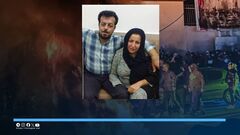
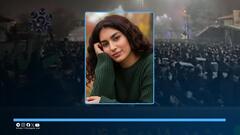
The death sentences issued against Mohammadreza Majidi Asl and Bita Hemmati, a young couple from Tehran detained during the January 2026 protests, have been overturned by Iran’s Supreme Court.
According to information obtained by the Hengaw Organization for Human Rights, the Supreme Court recently overturned the death sentences of Bita Hemmati and her husband, Mohammadreza Majidi Asl, and referred their case to a parallel court branch for retrial.
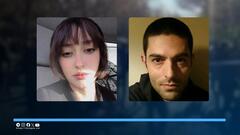
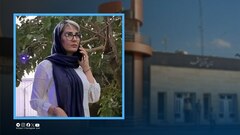
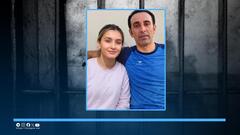
In late April of this year, Bita Hemmati and Mohammadreza Majidi Asl, along with their two co-defendants, Behrouz Zamani Nejad and Kourosh Zamani Nejad, were sentenced by Branch 26 of the Tehran Revolutionary Court, presided over by Judge Iman Afshari, to death, prison terms and confiscation of property. Another defendant in the same case, Amir Hemmati, was sentenced to prison.
According to the ruling, Mohammadreza Majidi Asl, Bita Hemmati, Behrouz Zamani Nejad and Kourosh Zamani Nejad had been sentenced to death on charges of “operational action in favor of the hostile government of the United States and hostile groups.”
In addition to the death penalty, the four defendants were each sentenced to five years of imprisonment on charges of “assembly and collusion against national security,” and all of their property was ordered confiscated as a supplementary punishment.
In the same case, Amir Hemmati, identified as the fifth defendant, was sentenced by the Tehran Revolutionary Court to five years in prison for “assembly and collusion” and an additional eight months for “propaganda against the state.”
The Revolutionary Court cited accusations such as “participation in gatherings on January 8 and 9,” “chanting slogans,” “destruction of public property,” and unsubstantiated allegations including “throwing incendiary materials and using an unidentified weapon.”
However, the text of the ruling failed to provide any precise or individualized evidence regarding the role of each defendant.
The defendants were arrested by Iranian security forces on January 9, 2026, during public protests in Tehran.
Hengaw had previously reported that the defendants were subjected to severe physical and psychological pressure during interrogations in order to extract forced confessions. They were also denied access to lawyers of their own choosing and other basic fair trial standards throughout the judicial process.