Twelve death row prisoners in the Alikhani Square case transferred amid fears of imminent executions
Hengaw – Saturday, July 18, 2026
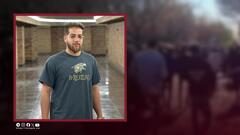
Authorities at Isfahan Central Prison have transferred around 30 political prisoners and prisoners of conscience, including 12 protesters sentenced to death in the so-called Alikhani Square case, to an undisclosed location, raising fears that the authorities may be preparing to carry out their executions. The transfer comes amid an escalating campaign of judicial and political retaliation against protesters.
According to information received by the Hengaw Organization for Human Rights, prison officials told the prisoners they were being taken to meet the judge overseeing the Alikhani Square case before removing them from their ward at approximately 7:00 a.m. on Saturday, July 18, 2026. Those remaining in the ward launched a strike in protest after the prisoners were taken away.
Hengaw has learned that all communication between the transferred prisoners and those remaining in the prison was completely cut off after they were removed from the ward. Conflicting reports have since emerged from inside the prison. Some sources indicate that the prisoners were transferred to solitary confinement in preparation for the implementation of their death sentences, while others suggest they may have been taken for further interrogation or placed in quarantine. As of the time of publication, no information is available regarding the whereabouts or conditions of detention of the approximately 30 prisoners, including the 12 men sentenced to death.
The Supreme Court recently upheld the death sentences imposed on all 12 defendants in the joint case and referred the case to the Enforcement of Sentences Office of the Isfahan Revolutionary Court.
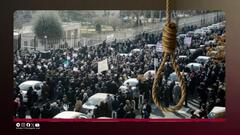
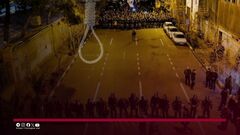
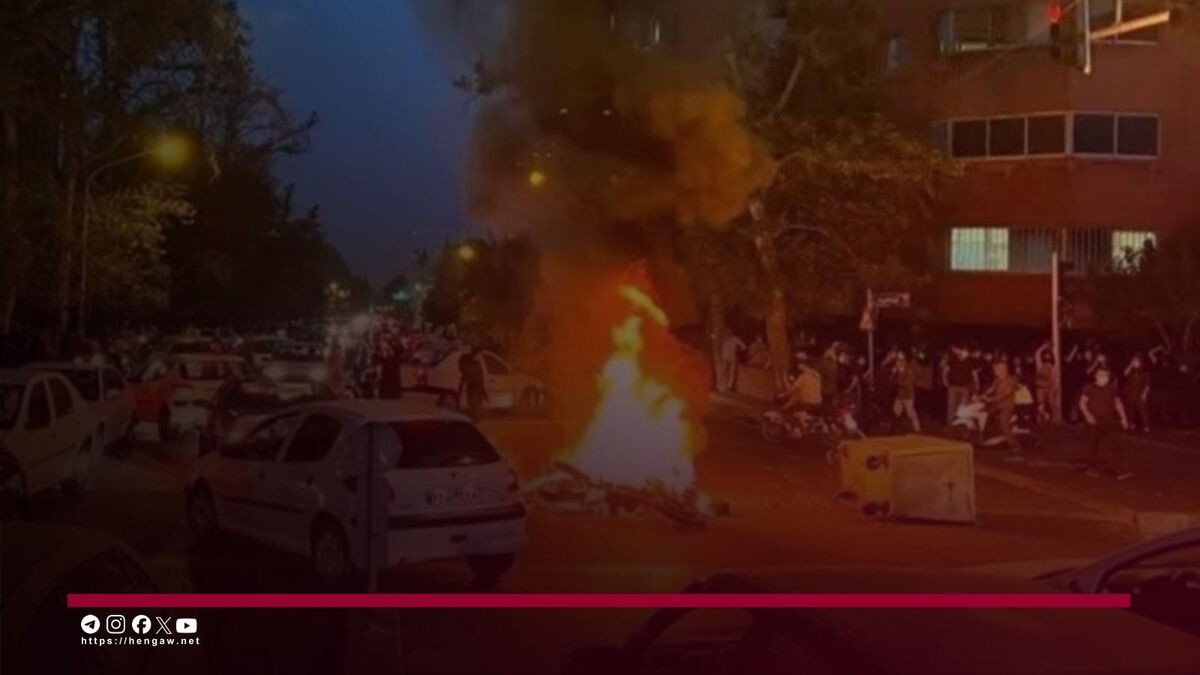
The prosecution stems from protests around Alikhani Square, located between the Malek Shahr and Kaveh districts of Isfahan, on January 8, 2026. During demonstrations on January 8 and 9, security forces opened direct and lethal fire on protesters, killing several residents of Isfahan. Iranian authorities claim that four members of the Basij and Special Units—Hossein Ramezani, Mohammad Hemmati, Seyed Ali Khoshouei, and Valiollah Safari—were also killed during the unrest. Following the events, at least 59 people were arrested in a mass crackdown.
Proceedings were held before Branch One of the Isfahan Revolutionary Court, presided over by Judge Mohammad Barati Darcheh, alongside Judge Mohammad Tavakkoli. Tavakkoli was among the judges who issued the death sentences in the controversial and deadly 2023 House of Isfahan (Khaneh Isfahan) case, which resulted in the executions of Saleh Mirhashemi, Majid Kazemi, and Saeed Yaghoubi.
According to informed sources, Mohammad Nakhjavani served as the prosecutor in the case. The entire trial consisted of only three brief, one-hour hearings that sources described as staged proceedings. Throughout the process, the defendants were completely denied access to lawyers of their own choosing, and the verdicts were based on statements extracted under torture and forced confessions.
Under the court's ruling, 23 of the 59 defendants were sentenced to prison terms ranging from five to ten years, while the following 12 defendants were sentenced to death:
1. Shervin Baqerian, 19 — sentenced to death once
2. Erfan Esfandiari, 19 — sentenced to death once
3. Abolfazl Ebrahimi, 19 — sentenced to death once
4. Amirhossein Maleki, 20 — sentenced to death once
5. Ali Dashti, 20 — sentenced to death once
6. Amirhossein Ebrahimi Analoujeh, 20 — sentenced to death once
7. Qaem Hosseini, 21 — sentenced to death twice
8. Alireza Raeisi, 22 — sentenced to death twice
9. Abolfazl Sepahi, 23 — sentenced to death three times
10. Gol Mohammad Mohammadi, 23, an Afghan refugee — sentenced to death twice
11. Alireza Sepahi, 25 — sentenced to death four times
12. Amirhossein Safari, 29 — sentenced to death once
The Hengaw Organization for Human Rights expresses grave concern over the fate of these 12 young men and calls on international human rights bodies, Amnesty International, the Office of the United Nations High Commissioner for Human Rights, and the international community to take immediate action to prevent the executions, including through urgent diplomatic and punitive measures against the Islamic Republic of Iran.