Hengaw raises alarm over systematic sexual torture and summary courts used against protest detainees
Hengaw Organization for Human Rights has obtained deeply disturbing evidence documenting the systematic torture of detainees, particularly young people arrested during the recent protests spanning late December 2025 and January 2026. The findings indicate the deliberate use of female interrogators against young male detainees to inflict psychological and sexual humiliation, alongside severe sexual violence against female detainees, threats of execution, mock trials, and the rapid issuance of sentences without due process.
Based on interviews with multiple recently released detainees, Hengaw has documented newly employed interrogation practices aimed at extracting rapid confessions and enforcing swift repression. These practices include summary courts held without legal procedure and the use of extreme psychological, physical, and sexual violence. The detainees interviewed range in age from 18 to 32, include individuals of different genders, originate from different cities and regions, and were held in separate detention facilities. None had any prior connection to one another. Despite this, their accounts of coercion, threats of death and execution, and severe sexual and psychological abuse show a strikingly consistent pattern.
Hengaw has confirmed that some detainees were held in military facilities, while others were detained and interrogated in residential houses. Several young male detainees reported being interrogated by teams consisting of both male and female interrogators. According to these accounts, female interrogators played a central role in administering severe psychological and sexual torture, an approach Hengaw considers a newly documented method of abuse in recent interrogations. These practices were primarily used to force written and video confessions to serious security-related charges connected to the protests. In many cases, detainees were explicitly told they would not be released unless they confessed.
One young male detainee told Hengaw:
“For the first two or three days, it was just searches and information gathering. Then the number of detainees sharply decreased and interrogations intensified. I had two interrogators, one man and one woman. The male interrogator played the good cop, and the female interrogator played the bad cop. They pressured me to say I had a firearm. Sometimes they pointed a gun at my forehead and said they would shoot. They told me I had to confess to receiving money from foreign intelligence services.”
The same detainee added:
“One day I was forced to lie on the ground for hours while being interrogated. They pressured me to insult those killed in the protests. I am deeply ashamed of that. They showed me photos of the bodies and said, ‘This will be your fate if you don’t confess.’ She poured hot tea on me, spat in my face, pressed her foot on my face. Before my release, they forced me to thank that female interrogator.”
Another detainee, a 19-year-old man, told Hengaw:
“We were held in a large residential detention site. Men and women were separated, and even detainees were separated by age. Teenagers were taken elsewhere. I had three interrogators, two men and one woman. The female interrogator was extremely brutal. They constantly told me they would kill me. They even said they had already informed my family of my death. They put a noose around my neck and said they would execute me.”
Through multiple interviews, Hengaw has established that during this protest crackdown, Iranian authorities employed summary courts to extract forced confessions and issue rapid sentences. Most detainees reported being subjected to intense sexual, physical, and psychological pressure to record written and video confessions against themselves. Some said they were summoned to court proceedings only days after their arrest.
In threatening public statements issued during this period, Iranian authorities declared that protesters would be treated as “enmity against God,” “terrorists,” and “foreign agents,” and that their cases would be processed swiftly. Detainees told Hengaw they were forced to confess to drug use and to receiving money or instructions from foreign intelligence services, political parties, Israel’s Mossad, or media outlets outside Iran.
A 32-year-old female detainee explained to Hengaw:
“They entered with ropes, drills, and hooks and pointed to the ceiling, saying they would execute us. They accused me of working with Mossad and said I had received money from Kurdish political parties. They kept trying to link me to networks outside Iran. They poured cold water on me and used extensive sexual torture. I constantly heard the screams of people being tortured. There was even a 12-year-old child among the detainees. There were so many of us that we couldn’t even stretch our legs.”
Hengaw has also learned that immediately after arrest, detainees were checked for mobile phones. If no phone was found, detainees were often transferred quickly to Revolutionary Courts. Those found with phones, particularly if protest footage was discovered, were held in official and unofficial detention centers and subjected to severe torture to extract confessions.
All detainees interviewed by the organization were eventually released after days or weeks of torture upon posting heavy bail. Some are now awaiting court hearings. Several reported that their mobile phones were confiscated by security agencies and never returned.
Another detainee, a 22-year-old man, told Hengaw:
“I was detained in a residential house. I don’t know who my interrogators were. I was beaten and threatened, but the worst abuse came from a female interrogator. She forced me to kiss her feet, humiliated me repeatedly, and threatened me with sexual assault.”
Several detainees said that before speaking about their experiences, they had contemplated ending their own lives.
Hengaw warns of the widespread use of sexual violence in this wave of arrests and assesses the psychological condition of detainees as critical. The organization urgently calls on Iranian civil society and the international community to ensure immediate and safe access to independent psychological support for detainees.
According to Hengaw’s findings, Iranian authorities carried out mass arrests and employed extrajudicial methods, including practices that bypass even the state’s own judicial framework, while making extensive use of torture in detention facilities, some of whose locations remain unknown. Interrogators and security agents involved appear to operate with full legal impunity.
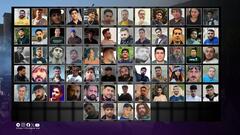
Based on verified data from the organization’s Statistics and Documentation Center, more than 40,000 people have been arrested across Iran since the start of the recent protests. Hengaw has so far confirmed the identities of 2,500 detainees, including 186 women and 218 children under the age of 18. The organization has also verified the identities of 1,270 individuals killed during the protests, including 125 women and 93 children.
Hengaw issues a serious warning regarding the lack of transparency in Iran’s judicial system concerning the number, identities, and locations of detainees; the systematic use of physical, psychological, and sexual torture against predominantly young protesters; and the pressure placed on families to remain silent. The organization urges families and acquaintances of detainees to report arrests to human rights organizations to help prevent further abuses.