Iran executes former military official on espionage charges as wave of political executions continues
Hengaw – Wednesday, April 22, 2026
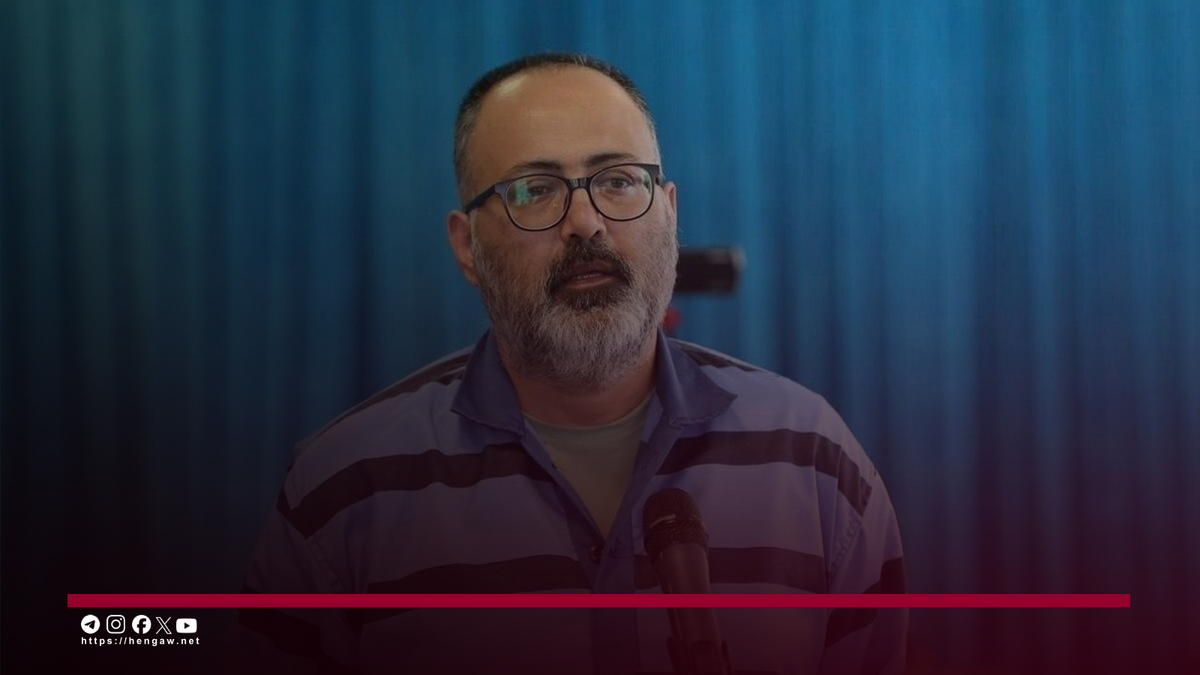
Iranian authorities have executed a former military official Mehdi Farid, from Arak, on charges of espionage for Israel.
According to information obtained by the Hengaw Organization for Human Rights, Farid, who had previously served as a head of the management department of the Passive Defense Committee within one of the country’s sensitive institutions, was executed in secret early Wednesday, April 22, 2026, in an undisclosed location. His detention had not been publicly reported prior to the announcement of his execution.
Iran’s judiciary-affiliated Mizan news agency confirmed the execution but did not disclose details about the location of his detention or where the sentence was carried out.
Hengaw has learned that Farid was arrested on June 1, 2024. He was later sentenced to 10 years in prison by Branch 26 of Tehran’s Revolutionary Court. He was subsequently retried and sentenced to death by Branch 23 of Tehran’s Revolutionary Court on charges of spying for Israel.
Judiciary-linked media claimed that Farid had been accused of cooperating with Israel’s intelligence service, Mossad, and of providing sensitive information, including organizational charts, facility layouts, security conditions and personnel identities.
Hengaw condemns the execution and empthise that Farid, like many defendants in security cases in Iran, was denied access to an independent lawyer, a public trial and the standards of due process. The judiciary’s reliance on so-called “explicit confessions” in such cases comes despite the fact that these confessions are often extracted under severe security pressure and through psychological and physical torture in secret detention centers, rendering them legally invalid.
Hengaw once again warns that the Islamic Republic of Iran systematically uses accusations such as “spying for the Zionist regime” as a tool for internal purges, spreading fear within society, and justifying security crackdowns. The lack of transparency in this case and the concealment of judicial details from public scrutiny are further evidence of the arbitrary and politically motivated nature of these death sentences.