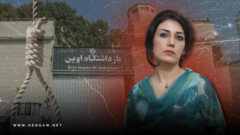
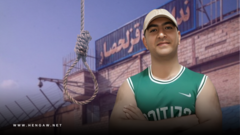
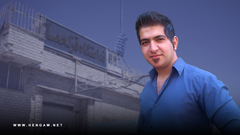
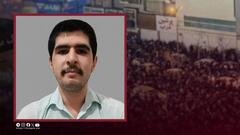
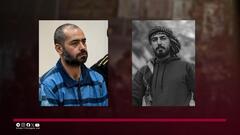
Hengaw releases new details on the executions of Kurdish student Omid Behzad and Turkish man Pouria Safvat at Urmia Central Prison
Hengaw – Monday, August 3, 2026
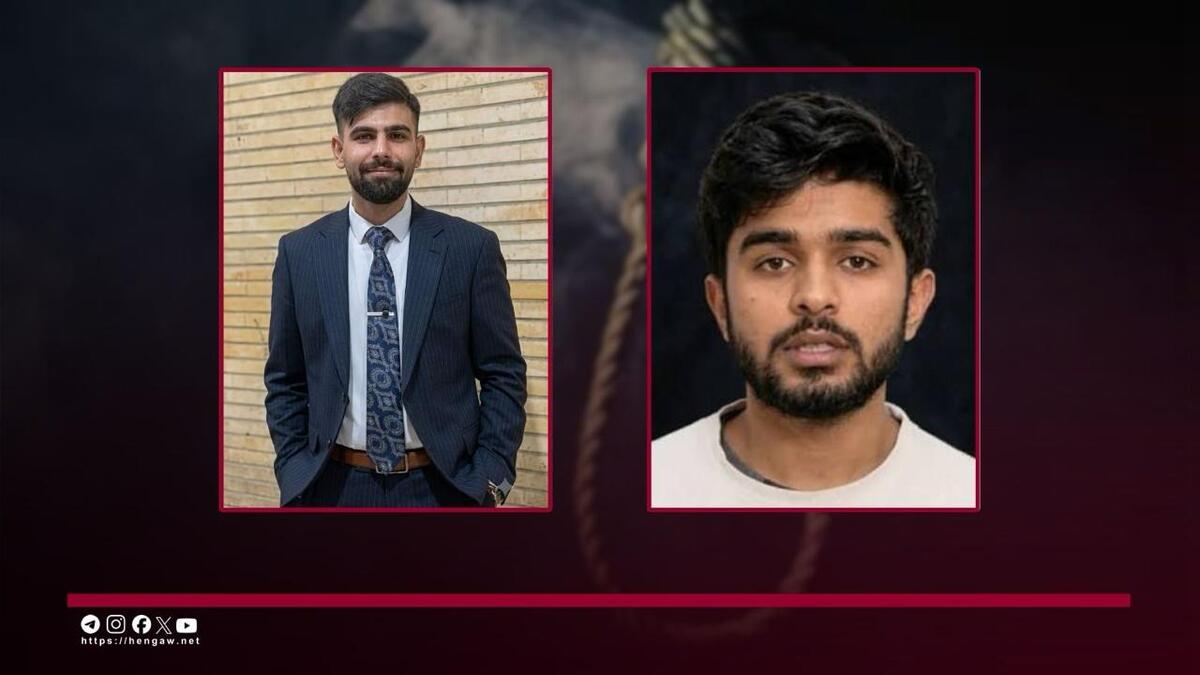
Iranian authorities executed Omid Behzad, a Kurdish university student from Urmia, and Pouria Safvat, a Turkish prisoner, at Urmia Central Prison after the two were arrested during Iran’s 40-day war on charges of “spying for Israel (Mossad),” according to new information obtained by the Hengaw Organization for Human Rights. Their bodies have not been returned to their families.
The executions were carried out at dawn on August 3, 2026, at Urmia Central Prison. Omid Behzad’s execution was carried out despite the fact that Iran’s Supreme Court had overturned his death sentence on August 1, 2026.
Behzad, 21, was a Kurdish resident of Urmia, a university student at the Islamic Azad University of Urmia, and unmarried. He was arrested in March 2026, several days after the outbreak of the 40-day war. Although his lawyer had successfully secured the annulment of his death sentence before the Supreme Court, security and judicial authorities proceeded with the execution. The families of both prisoners were summoned for a final visit on August 2.
Sources familiar with the case said the only basis for the security charges against Behzad was his use of a virtual private network (VPN) to access the internet during the internet shutdown and his previous membership in the Telegram channel of Iran International. His family had refrained from speaking publicly about the case in the hope of securing his release through legal channels.
Safvat, a Turkish man, was arrested during the same period and sentenced to death after a security-driven case based on forced confessions alleging that he had transmitted images to Iran International and Israel’s Mossad.
Iran’s judiciary-affiliated Mizan News Agency announced the executions and released videos of the prisoners’ televised confessions but did not disclose the location where the sentences were carried out.
Carrying out Behzad’s execution despite the Supreme Court’s decision overturning his sentence amounted to an extrajudicial execution. The proceedings against both men relied on confessions obtained under torture, denied them access to a fair trial, and were marked by secrecy, in violation of Articles 6 and 14 of the International Covenant on Civil and Political Rights.
Hengaw condemns the executions and calls for the establishment of an international fact-finding mechanism to investigate secret and unlawful executions in Iran.