Hengaw highlights concerns surrounding the suspicious death of human rights lawyer, Khosrow Alikurdi
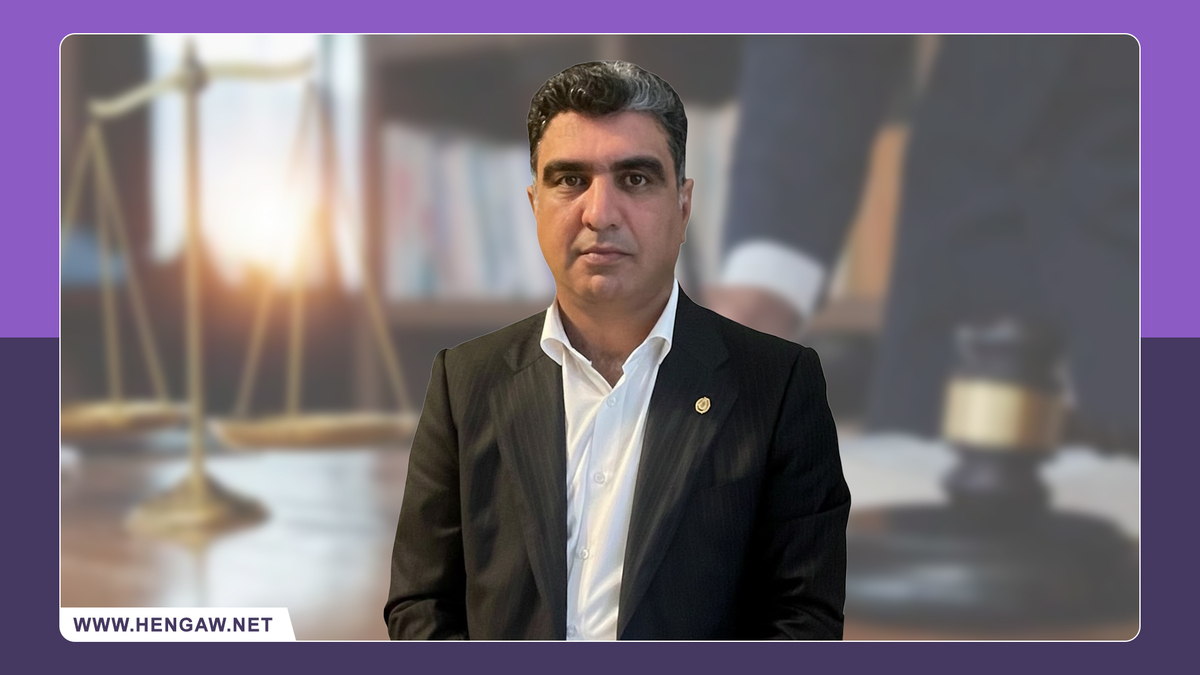
Hengaw — Sunday, December 7, 2025
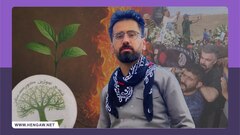
Hengaw Organization for Human Rights has compiled a detailed report on the suspicious death of Khosrow Alikurdi, a Kurdish human rights lawyer and former political prisoner, who died under unclear circumstances on Friday, December 5, 2025. While authorities have attributed his death to cardiac arrest, early evidence and statements from relatives and lawyers, including indications of unusual bleeding and possible physical harm, have raised serious questions about the cause of his death. His political background and long-standing work defending political detainees and sensitive human rights cases have further heightened concerns regarding possible government involvement.
Hengaw collected the details of Alikurdi’s suspicious death based on information from trusted sources, lawyers, individuals close to him, initial evidence, and reactions from state and judicial authorities.
The organization also expresses deep sorrow over the death of Khosrow Alikurdi and calls for an independent and impartial investigation to determine the cause of his death.
Suspicious death of Khosrow Alikurdi
Khosrow Alikurdi, a 45-year-old Kurdish lawyer from Sabzevar and a resident of Mashhad, died in his office on Friday, December 5, 2025. Judicial and law enforcement authorities claimed that he suffered a cardiac arrest. However, early evidence and reports from lawyers close to the case, pointing to possible physical harm, have raised serious doubts about how he died.
The rapid intervention of government forces in the early hours, the removal of security cameras from the site, and restrictions placed on the family’s access to the scene have increased concerns about possible government involvement.
Reactions to the suspicious death of Khosrow Alikurdi
Information regarding Alikurdi’s death remains incomplete and unclear, and serious questions persist.
His suspicious death has drawn strong reactions from civil society activists, legal professionals, and the human rights community. Many of his colleagues, citing the long-standing pattern of security pressure against him, have called for immediate transparency and the formation of an independent fact-finding committee. They stress that the serious ambiguities surrounding his death make an independent investigation essential.
Human rights organisations have also described his death as deeply concerning, noting that his history of arrests, repeated court rulings, and judicial restrictions has heightened fears of security involvement.
Biography and rights violations
Khosrow Alikurdi, born on November 27, 1979 in Sabzevar, was admitted in 2010 to the master’s programme in Public Law at Allameh Tabataba’i University. However, the Ministry of Intelligence blocked his enrollment. Although the Administrative Court of Justice later ruled in his favour, the university refused to implement the decision, preventing him from continuing his studies. He later pursued his education at Azad University in Tehran.
After serving one year in Vakilabad Prison in Mashhad, he was released on January 30, 2025. Despite five years of doctoral studies in Public Law, he was barred from continuing due to his imprisonment.
Professional background and human rights work
Alikurdi represented several political prisoners and civil activists, including Hassan Bagherinia, Fatemeh Sepehri, and the family of Abolfazl Adinezadeh, a teenager killed during the Woman, Life, Freedom (Jin, Jiyan, Azadi) movement. His work placed him under constant threat, summons, arrest, and heavy judicial sentences in recent years.
He frequently used his social media platforms to speak out against the repression of citizens and violations of civil and political rights by the Iranian government, and he publicised the harsh conditions and ill-treatment of political prisoners.
Political background, arrests, summons, rulings, and security pressure
Alikurdi had a lengthy history of fabricated charges and security-judicial pressure. In late November 2023, Branch 1 of the Revolutionary Court of Mashhad sentenced him to one year in prison, two years of exile, two years of travel ban, and two years of prohibition from practising law and using social media. In another case, Branch 3 of the Criminal Court of Mashhad fined him 21 million tomans on a charge of “spreading false information.”
The lawyer was detained after being summoned to Branch 901 of the prosecutor’s office on August 1, 2023, and was released four days later on bail. He was re-arrested to serve his one-year sentence on February 17, 2024, and transferred to Vakilabad Prison. Later, on December 24, 2024, while serving his previous sentence under an “open prison” arrangement, he was again arrested outside Vakilabad Prison.
Branch 5 of the Revolutionary Court of Mashhad, presided over by Judge Yazdankhah, sentenced him to another year in prison in October 2024 on the charge of “propaganda against the state” for social media posts.
Alikurdi’s political background and human rights work, including repeated arrests, judicial rulings, and restrictions imposed by security agencies, have played a significant role in increasing the suspicions surrounding his death.
Burial of Khosrow Alikurdi
Alikurdi was buried on Sunday, December 7, 2025, in his hometown of Abdalabad in Sabzevar, in the presence of a large gathering of residents, civil society activists, friends, and colleagues. In his remarks at the funeral, Alikurdi’s brother, Javad Alikurdi, emphasised Khosrow’s moral and humanitarian commitment, recalling his years of defending the voiceless, taking on difficult cases, and enduring security pressure. He stressed that Khosrow Alikurdi’s ethical and professional legacy will continue to inspire his family, colleagues, and all those who believe in justice.