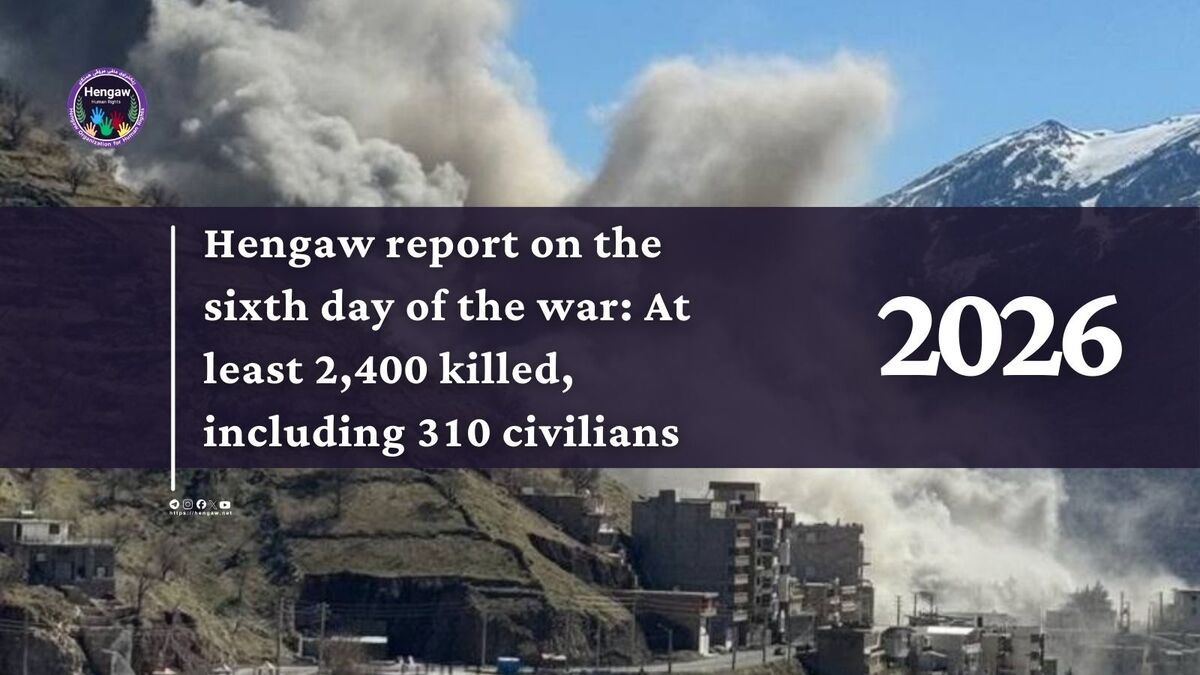
Hengaw report on the sixth day of the war: At least 2,400 killed, including 310 civilians
Hengaw – Wednesday, March 4, 2026
As the war between the United States, Israel, and the Islamic Republic of Iran enters its sixth day, the Hengaw Organization for Human Rights continues its field-based documentation of casualties and military strikes across Iran.
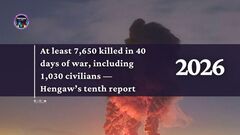
According to verified data compiled by Hengaw, at least 2,400 people have been killed since the start of the conflict. Of these, 310 were civilians (13%), while approximately 2,090 were members of Iranian military and security forces.
Geographic scope of the attacks and distribution of casualties
According to data collected by Hengaw’s Statistics and Documentation Center, between Saturday, February 28, and Wednesday, March 4, 2026, military and government facilities in 163 cities across 24 provinces of Iran have been targeted in air and missile strikes.
The targeted locations included Islamic Revolutionary Guard Corps (IRGC) bases, Basij centers, military airports, missile facilities, police stations, judicial institutions, intelligence command and media centers, army barracks, and headquarters of special police forces.
The highest number of military casualties has been recorded in the following provinces:
• Tehran
• Kermanshah
• Kurdistan (Sanandaj)
• West Azerbaijan (Urmia)
• East Azerbaijan
• Sistan and Baluchestan
• Isfahan
• Alborz
• Ilam
Civilian casualties
Hengaw expresses serious concern over the growing number of civilian casualties, particularly in areas located near military installations.
The highest number of civilian deaths has been documented in Hormozgan Province, where a large number of victims were elementary school girls killed in an airstrike on the “Shajareh Tayyebeh” school.
Civilian fatalities — including women and children — have also been confirmed in several other provinces, including: Tehran, Kurdistan (Sanandaj), Kermanshah, Razavi Khorasan, Qazvin, Alborz, West Azerbaijan (Urmia), East Azerbaijan
According to Hengaw’s documentation, at least 310 civilians have been killed so far, accounting for 13 percent of the total number of confirmed fatalities.
Despite the ongoing conflict, the Islamic Republic of Iran has not evacuated residential areas located near military or security installations. Instead, civilians have been forced to organize their own evacuations, seeking refuge in safer areas without coordinated state assistance.
Hengaw has learned that Iranian military units have abandoned some of their formal bases and relocated to facilities inside civilian neighborhoods, including schools, student dormitories, and mosques. Such practices could significantly increase the risk of civilian casualties if those locations are targeted.
Since the early days of the war, families of detainees and prisoners have reported a lack of information regarding the safety and conditions of their relatives inside Iranian prisons.
Conditions in several facilities have become increasingly dangerous. In Ghezel Hesar Prison, for example, prison guards have locked several wards, preventing inmates from evacuating or seeking shelter in the event of airstrikes.
At the same time, a number of prisoners — including political detainees — have been temporarily released on bail in Marivan, Naqadeh, Salmas, Urmia, Sanandaj, Mahabad, and Ilam.
Heavy government casualties in Kurdistan and concealment of figures
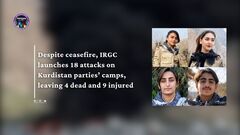
Over the past six days — particularly during Monday, Tuesday, and Wednesday — airstrikes carried out by Israeli and U.S. forces have intensified against military and government targets in Kurdistan.
Hengaw’s investigations show that at least 109 military bases and security facilities across 30 cities in the provinces of Ilam, Kermanshah, Kurdistan (Sanandaj), and West Azerbaijan (Urmia) have been targeted.
According to Hengaw’s findings, approximately 400 Iranian military personnel have been killed in these four provinces over the past three days alone.
During the same period, at least 40 civilians were also killed, with the highest numbers recorded in Urmia, Sanandaj, and Kermanshah.
Hengaw had previously reported that Iranian security institutions have largely refrained from releasing accurate casualty figures, particularly regarding military losses in Kurdistan. In cases where official figures have been published, the numbers appear to be significantly lower than those documented through independent field investigations.
Hengaw emphasizes the importance of transparency in reporting casualties and identifying victims, as well as the protection of civilians during armed conflict in accordance with international humanitarian law.
Internet disruptions across Iran
Since the third day of the war, internet access across Iran has been subject to severe disruptions and widespread outages, restricting people’ ability to communicate and limiting access to independent information.
The Hengaw Organization for Human Rights once again calls on international institutions and monitoring bodies to closely observe the situation of civilians affected by the conflict.