15 activists arrested, 26 years in prison issued over mother-tongue education in 2025
Hengaw – Saturday, February 21, 2026
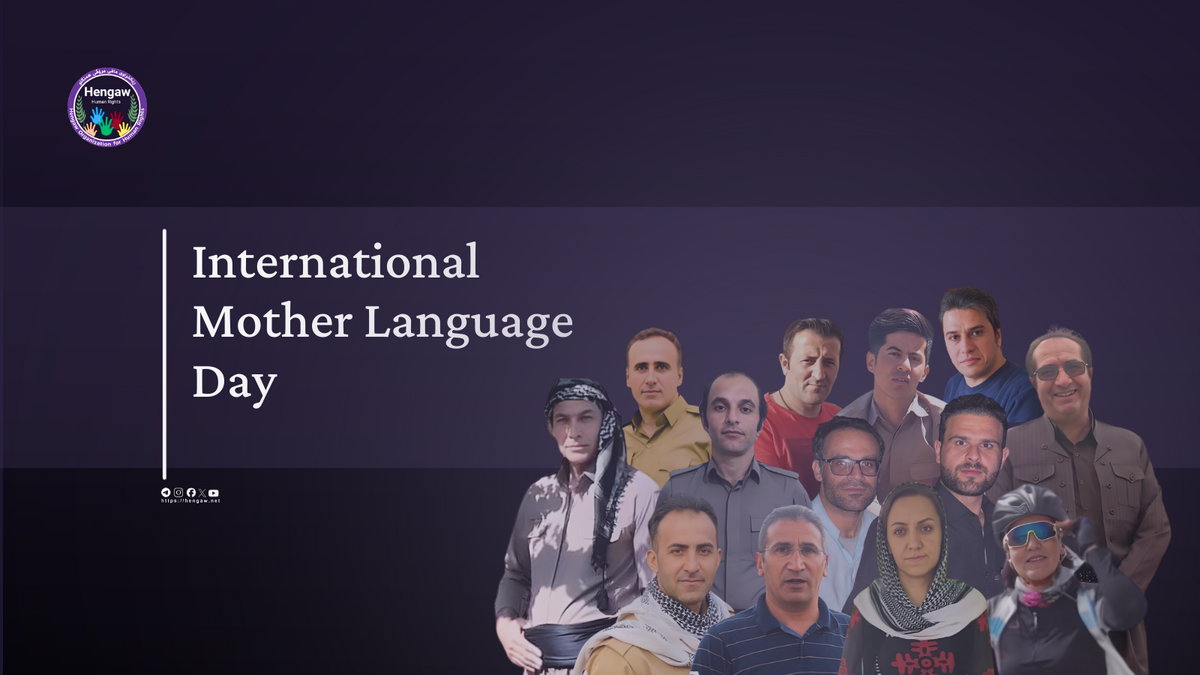
Iranian authorities intensified pressure on civil institutions and volunteer instructors teaching Kurdish, Turkish, and Balochi languages throughout 2025, arresting at least 15 activists and issuing heavy prison sentences against several of them. According to data recorded by the Statistics and Documentation Center of Hengaw Organization for Human Rights, at least four activists were collectively sentenced to 26 years and 10 months of discretionary imprisonment, along with 4 years of suspended prison terms.
Arrested Kurdish language activists
- Keyvan Minouei, from Marivan, was arrested on March 23, 2025.
- Srveh Pourmohammadi, from Sanandaj, was arrested on April 19, 2025, to serve a prison sentence.
- Samko Yousefi, from Bukan, was arrested on May 26, 2025.
- Omar Mohammadi, from Oshnavieh, was arrested on June 19, 2025.
- Sajjad Haeri, a Kurdish activist residing in Damavand, was arrested on July 12, 2025.
- Azam Naseri, a Kurdish activist from Shirvan in North Khorasan Province, was arrested on July 17, 2025.
- Hossein Seifi, from Shirvan, was arrested on July 17, 2025.
- Jowhar Herki, from Oshnavieh, was arrested on October 13, 2025, to serve a prison sentence.
- Idris Menbari, from Sanandaj (Sine), was arrested on November 8, 2025, to serve a prison sentence.
- Samko Yousefi was arrested again on December 8, 2025, marking his second arrest during the year.
- Omar Mohammadi was arrested again in November 2025 to serve a prison sentence.
Arrested Balochi language activists
- Saeed Raeisi, from Mehrestan in Sistan and Baluchestan Province, was arrested on May 26, 2025.
- Mohsen Raeisi, also from Mehrestan in Sistan and Baluchestan Province, was arrested on May 26, 2025.
Arrested Turkish language activists
- Mohammad Asadi, from Maragheh, was arrested on February 23, 2026.
- Behnam Vazirinia Qashqai, a Qashqai Turkish activist residing in Tehran, was arrested on June 20, 2025.
Prison sentences issued against mother-tongue activists
Authorities issued the following prison sentences:
- Jowhar Herki, a Kurdish activist from Oshnavieh, received 10 months of discretionary imprisonment from the Revolutionary Court of that city.
- Sajjad Haeri, a Kurdish activist from Ilam, received 2 years and 6 months of discretionary imprisonment from the Revolutionary Court of Damavand.
- Omar Mohammadi, a Kurdish activist from Oshnavieh, received 5 years and 6 months of discretionary imprisonment, in addition to 4 years of suspended imprisonment, from the Revolutionary Court of that city.
- Behnam Vazirinia Qashqai, a Qashqai Turkish activist, received a total of 18 years of discretionary imprisonment from the Revolutionary Court of Tehran.
These sentences amount to 26 years and 10 months of imprisonment, along with 4 years suspended.
The right to mother tongue
The right to use one’s mother tongue constitutes one of the most fundamental human rights, particularly in a country that is ethnically, linguistically, and nationally diverse. This right allows linguistic minorities, alongside using a common language, to use and develop their mother tongue in education, culture, and public life. It also plays a vital role in preventing the erosion of minority languages and the disappearance of the cultures and histories connected to them.
Kurdish, Turkish, Balochi, Arabic, Gilaki, and other minority languages in Iran have faced denial and suppression since the formation of the modern nation-state. Under the Islamic Republic of Iran, authorities have intensified these policies, frequently invoking accusations such as “separatism.” Security institutions maintain extensive control over educational, cultural, and judicial policies and have prevented even the limited implementation of Article 15 of the Constitution, which nominally permits the teaching of local languages.
By filing security cases against activists who voluntarily teach their mother tongue, authorities have paved the way for arrests and the issuance of heavy prison sentences.
Hengaw Organization for Human Rights assesses the pattern of arrests and state repression in the field of mother-tongue education as grave and deeply concerning.