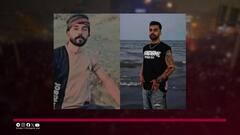
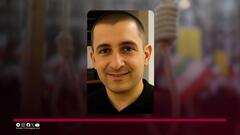
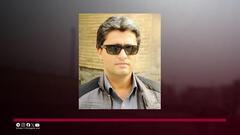
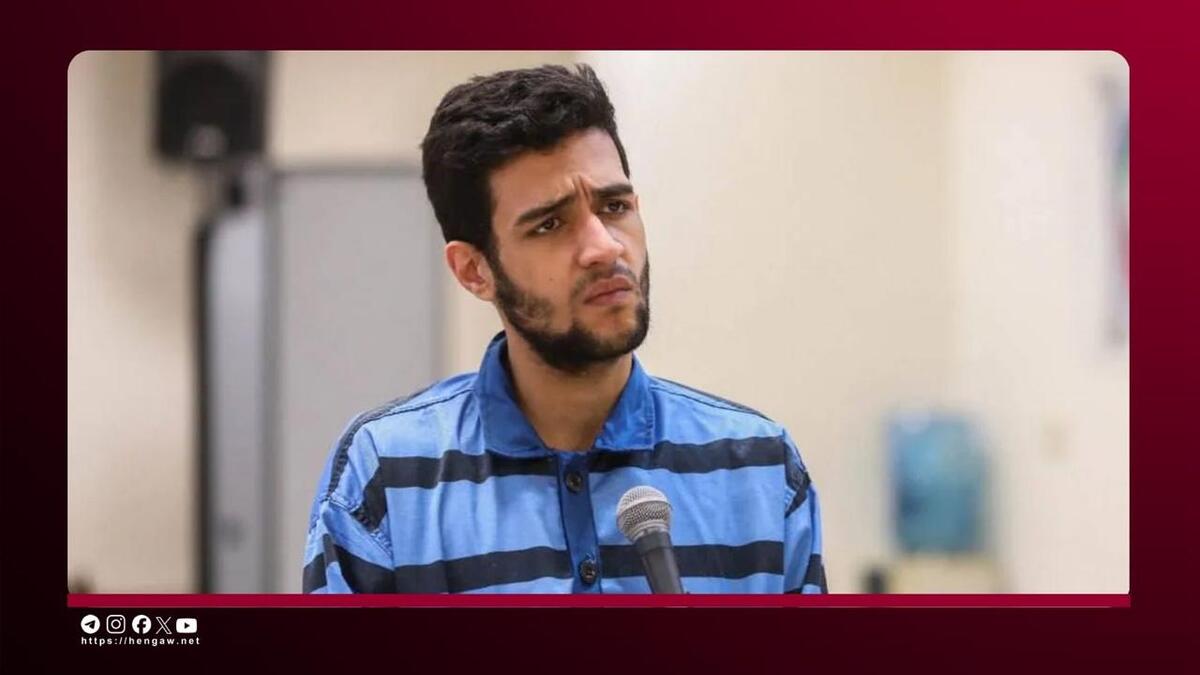
Iran executes Amirali Mirjafari, detained during recent protests
Hengaw – Tuesday, April 21, 2026
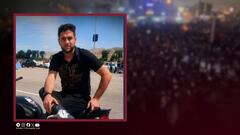
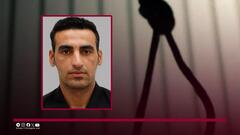
Amirali Mirjafari, one of those detained during protests earlier this year, has been executed amid an ongoing wave of executions targeting political prisoners, coinciding with the outbreak of the Iran–US–Israel war. He was put to death on charges including “setting fire to Qolhak Grand Mosque” and “leading protests,” in a process carried out in secrecy.
According to data from Hengaw, at least 17 political prisoners, including 8 individuals detained during the recent protests, have been executed in Iran since the start of the war.
Based on information received by Hengaw Organization for Human Rights, Mirjafari was executed in the early hours of April 21, 2026, at Qezel Hesar Prison in Karaj. The execution was carried out secretly, and he was denied a final visit with his family.
Mizan News Agency, the official media outlet of the Iranian judiciary, confirmed the execution, stating that the sentence had been carried out following a review of the case and approval by Iran’s Supreme Court. While the agency did not disclose the location of the execution, Hengaw has learned that it took place at Qezel Hesar Prison.
The Iranian judiciary claims that Mirjafari played a role during the protests in setting fire to Qolhak Grand Mosque, “leading anti-security actions,” damaging public property including buses and motorcycles, blocking roads by burning trash bins, and attacking security forces with cold weapons. He was also accused of “operational actions for the Zionist regime and hostile states” and of cooperating with what authorities described as “networks affiliated with Mossad,” charges that ultimately led to his death sentence.
However, according to Hengaw’s findings, Mirjafari was subjected to severe torture following his arrest in an effort to extract forced confessions. Throughout his detention and interrogation, he was denied access to legal counsel and was not permitted visits or contact with his family. News of his arrest had not previously been made public.
Hengaw had earlier warned that the execution of detainees from the recent protests, carried out only three months after their arrest, constitutes a clear violation of fair trial standards and fundamental human rights principles. The speed of proceedings in such opaque cases points to the instrumental use of the death penalty as a tool of political retaliation amid heightened regional tensions, particularly in the context of the Iran–US–Israel war. Such actions, carried out without due process and with the apparent aim of public intimidation, amount to arbitrary deprivation of life and a clear violation of the International Covenant on Civil and Political Rights.
Previously, the head of Iran’s judiciary, Gholamhossein Mohseni Ejei, had warned that punishments would be carried out swiftly and without administrative delays. He emphasized that all stages of legal proceedings—from the prosecutor’s office to the courts and the Supreme Court—should be handled on a special and expedited basis, and called for the application of “maximum decisiveness” in dealing with detainees from the recent protests.