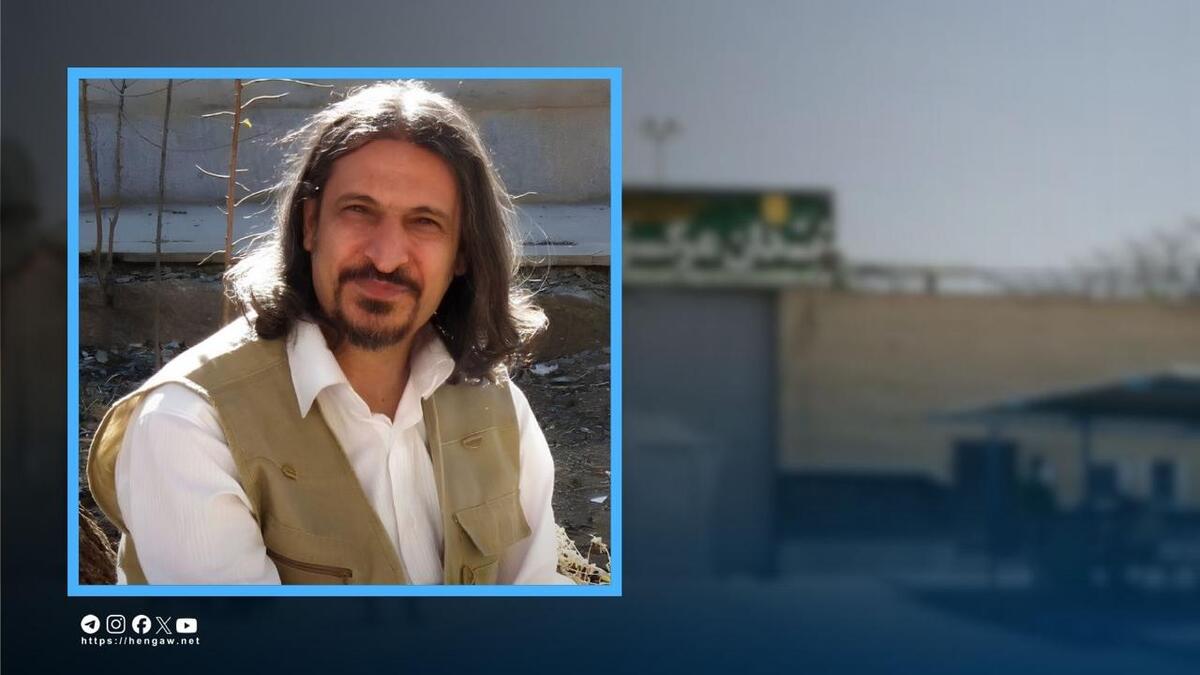
Political prisoner Heshmatollah Tabarzadi sentenced to three years in new case
Hengaw – Saturday, May 30, 2026
The Iranian judiciary has sentenced Heshmatollah Tabarzadi, a journalist, political activist, and political prisoner held in Isfahan Central Prison (Dastgerd Prison), to an additional three years in prison in a new case opened against him during his incarceration.
According to information received by Hengaw Organization for Human Rights, Branch 5 of the Isfahan Revolutionary Court, presided over by Judge Shahini, recently issued a verdict sentencing Tabarzadi to three years of discretionary imprisonment on charges of “propaganda against the state” and “insulting the Supreme Leader.” The ruling has been formally communicated to him.
The sentence comes while Tabarzadi is already serving a lengthy prison term in Dastgerd Prison. He was arrested in Golpayegan in September 2022 during the early stages of the Woman, Life, Freedom (Jin, Jiyan, Azadi) movement.
In a previous case jointly pursued by judicial authorities in Tehran and Isfahan, Tabarzadi was convicted following an unfair trial. Acting under judicial delegation, Judge Barati, head of Branch 1 of the Isfahan Revolutionary Court, sentenced him on multiple charges, including “insulting Ruhollah Khomeini,” “insulting the Supreme Leader,” “propaganda against the state,” “inciting and encouraging people to engage in war and violence against one another,” “cooperation with hostile states through interviews,” and “assembly and collusion against the internal and external security of the country.”
That case resulted in a combined sentence of 35 years and eight months in prison, a travel ban, and two additional supplementary punishments. Under Iran’s sentencing regulations, 11 years and six months of the prison term are enforceable.
The filing of new cases and the issuance of successive sentences against political prisoners during their imprisonment has become a systematic practice employed by Iran’s security and judicial institutions. The purpose is to wear down prisoners psychologically, prevent their release upon completion of their sentences, and intensify pressure on long-standing critics of the government.