Iran sentences at least 30 January protest detainees to death, secretly executes 13
Hengaw – Monday, May 4, 2026
Nearly three months after the mass killing of civilians during the protests earlier this year, the Iranian judiciary has launched a sweeping campaign of death sentences and executions targeting those arrested in the unrest.
Based on data compiled by the Statistics and Documentation Center of Hengaw Organization for Human Rights, at least 3,500 people were killed and nearly 40,000 were arrested during the protests.
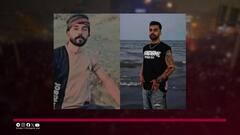
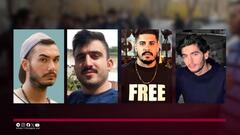
Hengaw’s findings show that at least 30 detainees from the protests have so far been sentenced to death by the Iranian judiciary. The death sentences of 13 detainees have already been secretly carried out in prisons in Qom, Karaj, Mashhad, and Isfahan. Several other prisoners have also been charged with moharebeh (waging war against God), placing them at risk of similarly severe punishments, including execution.
Hengaw Organization for Human Rights expresses grave concern over the condition of detainees and states that the deliberate internet shutdown imposed by the state has created severe obstacles to reporting and documentation. In several cases, the identities of protesters became known only after their secret executions, while no prior information had been available regarding their detention or condition. These death sentences have been issued and carried out with extreme speed, without due process or fair trial guarantees. Dozens of other prisoners remain at risk of execution.
Protest detainees secretly executed:
- Saleh Mohammadi of Qom was executed on March 19, 2026, in Qom Central Prison.
- Mehdi Ghasemi of Qom was executed on March 19, 2026, in Qom Central Prison.
- Saeed Davoudi of Qom was executed on March 19, 2026, in Qom Central Prison.
- Amir Hossein Hatami of Tehran was executed on April 4, 2026, in Ghezel Hesar Prison.
- Mohammadamin Biglari of Tehran was executed on April 5, 2026, in Ghezel Hesar Prison.
- Shahin Vahedparast Kalvar of Tehran was executed on April 4, 2026, in Ghezel Hesar Prison.
- Ali Fahim of Tehran was executed on April 5, 2026, in Ghezel Hesar Prison.
- Amirali Mirjafari of Tehran was executed on April 21, 2026, in Ghezel Hesar Prison.
- Erfan Kiani of Isfahan was executed on April 25, 2026, in Isfahan Central Prison.
- Ebrahim Dolatabadi of Mashhad was executed on May 3, 2026, in Mashhad Central Prison.
- Mehdi Rasouli, 25, from Kashmar, was executed on May 3, 2026, in Mashhad Central Prison.
- Mohammadreza Miri, 21, from Mashhad, was executed on May 3, 2026, in Mashhad Central Prison.
- Sasan Azadvar, a Lor man and resident of Isfahan, was executed at Isfahan Central Prison on April 30, 2026.
Protest detainees sentenced to death
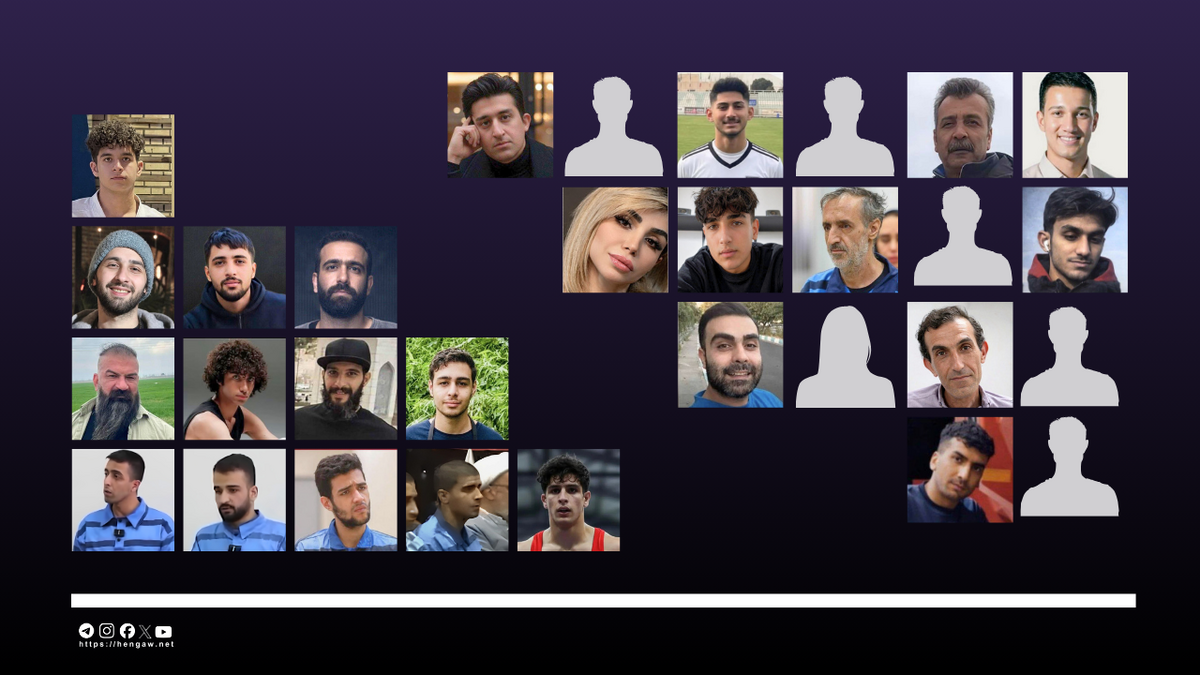
At least 30 prisoners have been sentenced to death in proceedings that failed to meet fair trial standards, many of them by Branches 15 and 26 of the Revolutionary Court in Tehran under Judges Abolghasem Salavati and Iman Afshari, while others were sentenced by revolutionary courts in Qom, Mashhad, Isfahan, and Shiraz. As noted earlier, 13 of those sentenced have already been secretly executed. The names of the 30 known prisoners are as follows:
- Mohammadamin Biglari, 19, from Tehran.
- Mohammad Abbasi, 55, from Malard.
- Saleh Mohammadi, 19, from Qom.
- Mehdi Ghasemi from Qom.
- Saeed Davoudi from Qom.
- Amir Hossein Hatami, 18, from Tehran.
- Ali Fahim, 23, from Tehran.
- Shahab Zahedi from Tehran.
- Abolfazl Salehi Siavashani from Tehran.
- Yaser Rajaeifar from Tehran.
- Shahin Vahedparast Kalvar, 30, from Tehran.
- Mohammadreza Majidi Asl from Tehran.
- Bita Hemmati from Tehran.
- Behrouz Zamaninejad from Tehran.
- Kourosh Zamaninejad from Tehran.
- Erfan Kiani from Isfahan.
- Maryam Hedavand, resident of Pakdasht.
- Matin Mohammadi from Pakdasht.
- Erfan Amiri from Pakdasht.
- Ehsan Hosseinipour Hesarloo, 19, from Pakdasht.
- Amirali Mirjafari from Tehran.
- Ebrahim Dolatabadi from Mashhad.
- Sasan Azadvar, 23, from Isfahan.
- Mohammadreza Tabari, 50, from Borujerd.
- Mehdi Rasouli, 25, from Kashmar.
- Mohammadreza Miri, 21, from Mashhad.
- Hamidreza Fathi from Marvdasht.
- Abdolreza Fathi from Marvdasht.
- Hamidreza Sabetray from Marvdasht.
- Saeed Zarei Kordshouli, 31, from Marvdasht.
Hengaw warning
Hengaw Organization for Human Rights warns of the imminent execution of other prisoners included in the above list and stresses the grave danger facing dozens of other unidentified detainees accused under fabricated security charges while being held under enforced disappearance and subjected to grossly unfair judicial proceedings.
The detainees have been denied the right to an effective defense and deprived of minimum fair trial standards. Hengaw holds the judiciary and security institutions of the Islamic Republic of Iran directly responsible for any further state-sanctioned killings.
Hengaw had previously warned, in its investigation into the Islamic Republic’s crimes during the suppression of the protests earlier this year, that authorities were moving toward issuing death sentences in what it described as field courts and carrying out rapid executions of protesters.
The organization calls on all international human rights organizations, the United Nations Human Rights Council, and the global community not to remain silent in the face of secret executions and the systematic deprivation of life of protesters in Iran. Continued silence over these crimes amounts to a green light for the Islamic Republic’s execution machinery to kill more unidentified detainees.
Hengaw calls for urgent international intervention to halt these sentences and for diplomatic pressure to secure the deployment of international fact-finding delegations to Iranian prisons. Hengaw also describes the continued internet shutdown in Iran as catastrophic and urges the international community to pressure parties negotiating with the Islamic Republic of Iran to place the restoration of internet access, the release of political prisoners, and an unconditional halt to executions on the agenda.