Five Gilak political prisoners face imminent risk of execution in Iran
Hengaw – Tuesday, June 23, 2026
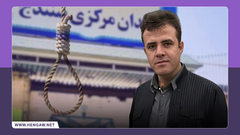
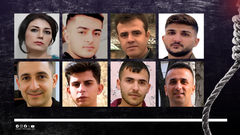
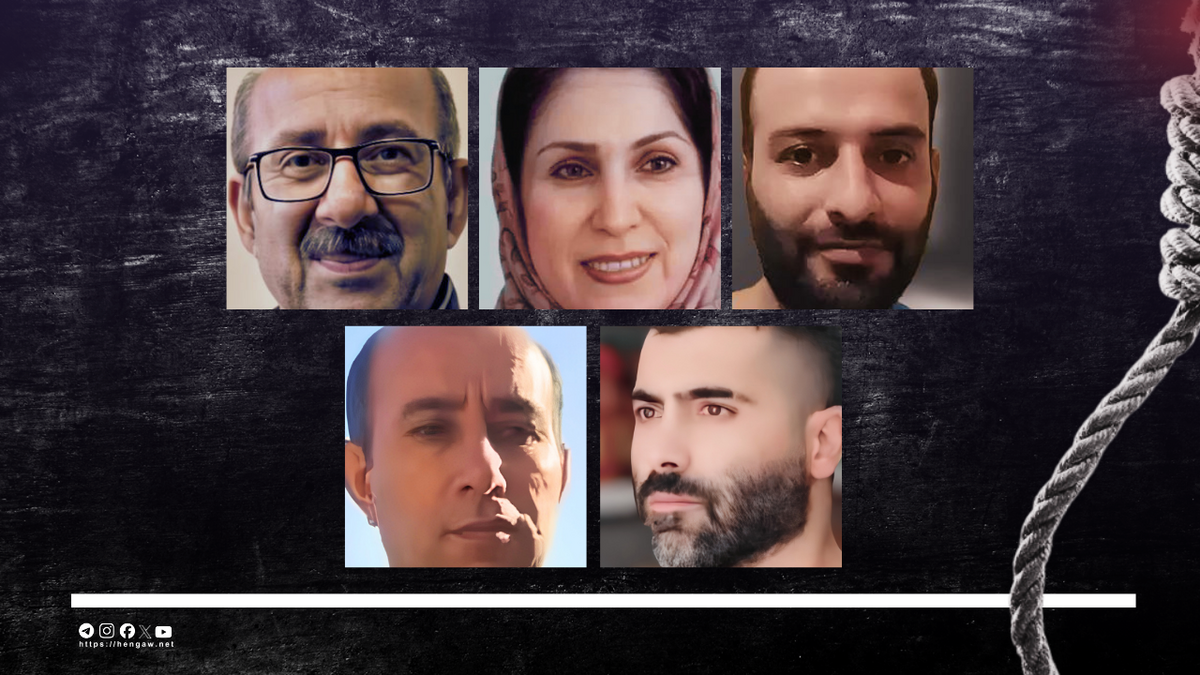
The ongoing surge in executions across Iran has heightened fears that five Gilak political prisoners — Manouchehr Fallah, Peyman Farahavar, Yaghoub Derakhshan, Zahra Shahbaz Tabari, and Karim Khojasteh — could face imminent execution. All five were sentenced to death by the Iranian judiciary on politically motivated charges following proceedings marked by serious due process violations, a lack of transparent evidence, and unfair trials.
Hengaw Organization for Human Rights has learned that the five prisoners are currently being held in Lakan Prison in Rasht amid growing concerns that their death sentences could soon be carried out.
Manouchehr Fallah
Manouchehr Fallah, a political prisoner from Rasht held in Lakan Prison, was sentenced to death in February 2025 by Branch Two of the Revolutionary Court of Rasht, presided over by Judge Ahmad Darvish Goftar, on charges of “waging war against God” (moharebeh) through alleged actions against national security.
Fallah staged a 28-day hunger strike in August 2024 to protest his prolonged legal limbo and the opening of a new case against him while in prison. He ended the strike following appeals from fellow inmates and former political prisoners.
In a separate case, Branch Three of the Revolutionary Court of Rasht, under Judge Mehdi Rasekhi, sentenced him in December 2024 to one year, three months, and one day in prison for “insulting Khamenei” and seven months and sixteen days for “propaganda against the state.” He completed that sentence in May 2025.
Iranian security forces arrested Fallah at Rasht Airport in July 2024 before transferring him to the Mithaq Ward of Lakan Prison.
Peyman Farahavar
Peyman Farahavar, a 37-year-old poet from Rasht known by the pen name Sheyda and currently imprisoned in Lakan Prison, was sentenced to death by Branch One of the Revolutionary Court of Rasht, presided over by Judge Ahmad Darvish Goftar, on charges of “armed rebellion” and “waging war against God” (moharebeh). He also received a three-month prison sentence for “propaganda against the state.” The Supreme Court later upheld the verdict in full.
During his detention, Farahavar was denied access to legal counsel and family visits and was subjected to severe torture over a two-month period.
His trial was held before Branch One of the Revolutionary Court of Rasht in May 2025. The allegations against him were largely based on his criticism of state institutions and officials over the destruction of Gilan’s environment and natural ecosystems.
Agents of the Intelligence Organization of the Islamic Revolutionary Guard Corps (IRGC) violently arrested Farahavar in Rasht in September 2024. After two months of interrogation and torture, he was transferred to Lakan Prison.
Through his poetry and writings, Farahavar had criticized environmental destruction, unchecked villa construction, and policies that have impoverished farmers in Gilan and pressured them to sell their land to non-local buyers. These activities appear to have formed the basis for the serious charges brought against him.
Karim Khojasteh
Karim Khojasteh, a 62-year-old political prisoner from Khomam in Gilan Province and a former political prisoner of the 1980s, was sentenced to death on charges of “armed rebellion” by the Revolutionary Court of Rasht without the presentation of clear evidence supporting the accusation. The verdict was formally communicated to him in December 2025.
Intelligence Ministry agents arrested Khojasteh at his workplace in March 2025 without presenting a warrant and subsequently transferred him to Lakan Prison.
He had previously been arrested on charges of “propaganda against the state” in July 2024 and was released on bail in November of the same year after spending approximately four and a half months in detention.
Zahra Shahbaz Tabari
Zahra Shahbaz Tabari, a 68-year-old electrical engineer, civil activist, and political prisoner from Rasht, was sentenced to death in May 2026 by Branch One of the Revolutionary Court of Rasht, presided over by Judge Ahmad Darvish Goftar, on charges of “armed rebellion” based on allegations of membership in the People's Mojahedin Organization of Iran (PMOI/MEK).
An earlier death sentence issued by the same court in October 2025 was overturned by the Supreme Court and returned for retrial in February 2026. Despite that ruling, the court again imposed the death penalty.
Her case is based on highly limited, fabricated, and unreliable evidence, including a piece of fabric bearing the slogan “Woman, Resistance, Freedom” and an unpublished audio message. No evidence has been presented indicating any organizational, structural, or military affiliation with any group.
Shahbaz Tabari is an electrical engineer, a member of the Iran Construction Engineering Organization, and holds a master's degree in Sustainable Energy from the University of Borås in Sweden.
Security forces raided her home in April 2025, searched the premises, confiscated electronic devices, and transferred her to Lakan Prison.
She had previously spent three months in detention for publishing peaceful protest-related content on social media and was later released under electronic monitoring.
Yaghoub Derakhshan
Yaghoub Derakhshan, a 51-year-old Gilak political prisoner from Bandar Anzali held in Lakan Prison, was sentenced to death on charges of “armed rebellion” by Branch One of the Revolutionary Court of Rasht, presided over by Judge Ahmad Darvish Goftar.
The verdict was referred for reconsideration in November 2025 to Branch Two of the same court and was subsequently reissued by Judge Mohammad Ali Darvish Goftar, again imposing the death penalty.
Derakhshan was arrested in April 2025. He was initially held on charges of “propaganda against the state,” but the charge was later escalated to “armed rebellion.”
All five prisoners were denied fundamental rights throughout their detention and prosecution, including access to legal counsel. They were sentenced to death in expedited proceedings before the Revolutionary Court of Rasht without the presentation of transparent or credible evidence and now face a serious risk of execution. Concerns have intensified over the past six months, particularly following the sharp rise in executions since January and the outbreak of war between Iran and Israel, which was later joined by the United States.
Hengaw Organization for Human Rights expresses grave concern over the situation of these five Gilak political prisoners in Lakan Prison and the possibility that their death sentences could be carried out in the coming weeks. Hengaw warns that continued international inattention to Iran’s escalating use of executions during ongoing diplomatic engagement with Tehran risks emboldening the Islamic Republic to carry out broader and more systematic repression.