46 human rights organizations urge UN Rights Council to hold emergency session on mass killings in Iran
Hengaw – Friday, January 16, 2026
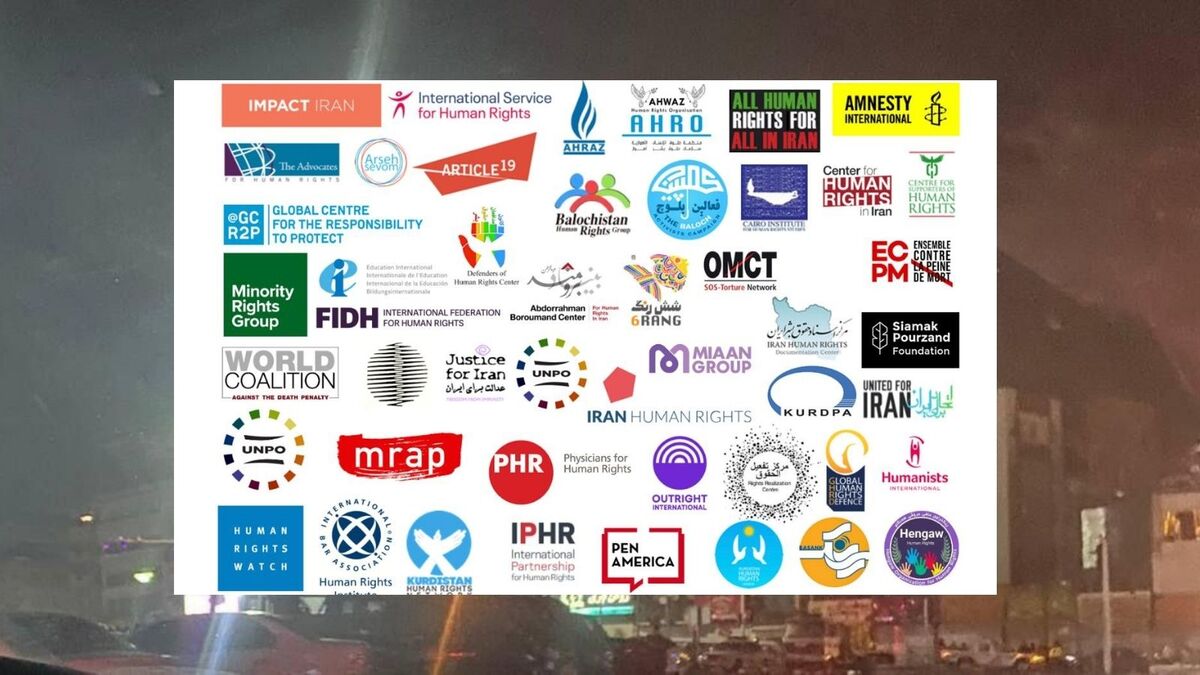
A coalition of 46 civil society and human rights organizations, including Hengaw, Amnesty International, and Human Rights Watch, has called on the United Nations Human Rights Council to urgently convene a special session, warning of an unprecedented escalation in mass unlawful killings of protesters in Iran amid a nationwide internet shutdown imposed to conceal grave human rights violations and crimes under international law.
Below is the full joint statement issued by the 46 undersigned organizations:
To: Member states of the United Nations Human Rights Council
Your Excellencies,
We, the undersigned civil society organizations, urge the UN Human Rights Council to
urgently convene a special session to address an unprecedented escalation in mass unlawful
killings of protesters, amidst an ongoing internet shutdown imposed since 8 January to
conceal grave human rights violations and crimes under international law by Iranian
authorities.
Since 28 December 2025, an escalating campaign of lethal repression aimed at crushing a
mostly peaceful uprising has led to the massacres of protesters during protest dispersals,
with the death toll rising to thousands, including by official admission. Establishing the real
death toll is not possible at the time of writing, given the unprecedented scale of mass
killings since 8 January and amidst an ongoing internet blackout, which has severely impeded
communication with the outside world and the ability of human rights organizations to
gather and corroborate information.
Verified videos and credible information received by our organizations from individuals in
Iran, including journalists, medical workers, protesters, eyewitnesses and victims’ relatives,
2
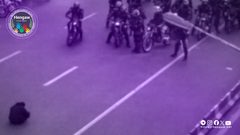
reveal widespread patterns of security forces positioned on the streets and rooftops,
repeatedly firing rifles and shotguns loaded with metal pellets, targeting unarmed protesters
frequently in their heads and torsos. According to eyewitness accounts and verified
audiovisual evidence, medical facilities are overwhelmed with the injured while distraught
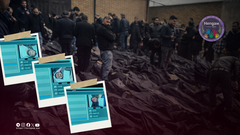
families have been searching for their missing loved ones among body bags near overflowing
morgues and witnessed bodies piled up in pick-up trucks, freight containers or warehouses.
The evidence gathered indicates a coordinated nationwide escalation in the security forces’
unlawful use of force, firearms and other prohibited weapons against mostly peaceful
protesters and bystanders since the evening of 8 January when protests grew in size
nationwide. Human rights monitors previously documented that even before the escalating
repression on 8 January, security forces unlawfully used rifles, shotguns loaded with metal
pellets, water cannon, tear gas, as well as physical beatings, killing dozens. Raids on hospitals,
involving the use of tear gas, shotguns and beatings of patients, their relatives and medical
workers and arrests of injured protesters in medical facilities have also been documented.
As part of their violent crackdown, security forces have also arbitrarily arrested thousands of
protesters, including children, and subjected many to enforced disappearance and
incommunicado detention. Given well-documented patterns during previous protests, we
are gravely concerned that detainees are at grave risk of torture and other ill-treatment as
well as arbitrary executions.
The undersigned civil society organizations are gravely concerned that authorities will once
again resort to swift trials that bear no resemblance to judicial proceedings and arbitrary
executions to crush and deter dissent. State authorities have labelled demonstrators as
“rioters” and “terrorists”, calling for a harsh response by the security forces. The Head of the
Judiciary, Gholamhossein Mohseni Eje’i, has ordered provincial prosecutors to show “no
leniency” to protesters and expedite their trials. Officials have also called for protesters to
face capital offences, including “enmity against God” (moharabeh), raising fears that those
arbitrarily detained may face the death penalty.
In a statement from 13 January, High Commissioner Volker Türk said he was “horrified by the
mounting violence directed by security forces at protesters across Iran”, adding “this cycle of
horrific violence cannot continue... The killing of peaceful demonstrators must stop, and the
labelling of protesters as ‘terrorists’ to justify violence against them is unacceptable”.
Tragically for the people of Iran, the latest wave of massacres is the culmination of a long-
standing pattern of lethal crackdowns on nationwide protests, including during the
November 2019 protests and the Woman Life Freedom uprising of September-December
2022. In-depth investigations of the latter led the Independent International Fact-Finding
Mission on the Islamic Republic of Iran to conclude that Iranian authorities committed the
crimes against humanity of murder, imprisonment, torture, rape and other forms of sexual
violence, persecution, enforced disappearance and other inhumane acts.
We urge UN member states to acknowledge that the repeated commission of grave human
rights violations and crimes under international law, including during successive waves of
protests in Iran, has been made possible by the entrenched and systemic impunity for those
3
responsible for these crimes. The lack of criminal accountability has emboldened Iranian
officials to persist in their criminal conduct and deliberately turn to mass killings of protesters
demanding human rights and dignity.
In this context, the Council must now act decisively by convening a special session and
adopting a strong resolution that signals unequivocally to Iranian authorities that the spiral
of bloodshed and impunity must end. Through the special session, the HRC should ensure
that the truth about these grave human rights violations and crimes under international law
is established and evidence preserved, requesting the Fact-Finding Mission to carry out an
urgent inquiry and ensuring it has the resources to carry out its investigations, and request
that they submit recommendations on concrete avenues to pursuing comprehensive justice
and ending the impunity that is driving the state policy of lethal repression.
The Council must also affirm the rights of people in Iran to freedoms of opinion, expression,
association and peaceful assembly as well as their right to freely and equally participate in
the political and public life of their country.
To this end, we call on the Council to:
Extend the mandate of the Independent International Fact-Finding Mission on the
Islamic Republic of Iran (FFMI) to enable continued investigations into the ongoing
wave of lethal repression, and renew the mandate of the Special Rapporteur on
human rights in Iran, whose role remains vital for engaging with state authorities,
including on urgent cases of individuals at risk of executions, torture and other
serious human rights violations, and for serving as a visible voice for the promotion
and protection of human rights for all in Iran;
Request the FFMI to conduct an urgent inquiry, consistent with its mandate, into
violations committed in the context of the current wave of protest repression, and to
present its findings in an oral update at the 62nd session, and a comprehensive report
at the 63rd session of the UN Human Rights Council, which should also include
recommendations for a comprehensive approach for justice to break the cycle of
impunity;
Ensure that the FFMI be provided with appropriate additional resources to fulfil its
mandate, including the additional reporting requested;
Enhance the joint interactive dialogue with the FFMI and the Special Rapporteur
scheduled for the 61st session of the UN Human Rights Council, to allow for the
participation of other stakeholders including survivors and Iranian human rights
defenders.
We thank you for your attention to these pressing issues and stand ready to provide your
delegation with further information as required.
Sincerely,
1. Abdorrahman Boroumand Center for Human Rights in Iran
2. Ahwaz Human Rights Organisation (AHRO)
3. All Human Rights for All in Iran
4. Amnesty International
4
5. ARTICLE 19
6. Association for the human rights of the Azerbaijani people in Iran - AHRAZ
7. Baloch Activists Campaign
8. Balochistan Human Rights Group
9. Cairo Institute for Human Rights Studies (CIHRS)
10. Center for Human Rights in Iran (CHRI)
11. The Centre for Supporters of Human Rights (CSHR)
12. Defenders of Human Rights Center ( حقوق مدافعان کانون ش
) ب
13. Education International
14. Global Centre for the Responsibility to Protect (GCR2P)
15. Global Human Rights Defence
16. Hawaii Institute for Human Rights
17. Hengaw
18. Human Rights Watch
19. Humanists International
20. Impact Iran
21. International Bar Association’s Human Rights Institute (IBAHRI)
22. International Educational Development (IED)
23. International Federation for Human Rights (FIDH)
24. International Practice of Human Rights (IPHR)
25. International Service for Human Rights (ISHR)
26. Iran Human Rights
27. Iran Human Rights Documentation Center
28. Justice for Iran
29. Kurdistan Human Rights Association-Geneva (KMMK-G)
30. Kurdistan Human Rights Network
31. Kurdpa Human Rights Organization
32. Miaan Group
33. Minority Rights Group
34. Mouvement contre le racisme et pour l'amitié entre les peuples (MRAP)
35. Outright International
36. PEN America
37. Physicians for Human Rights
38. Rasank
39. Rights Realization Centre
40. Siamak Pourzand Foundation
41. The Advocates for Human Rights
42. Together Against the Death Penalty (ECPM)
43. United for Iran
44. Unrepresented Nations and Peoples Organization (UNPO)
45. World Organisation against Torture (OMCT)
46. 6Rang (Iranian LGBT+ Network)