IRGC missile and drone attacks target civilian camps and Kurdish opposition bases in Iraq’s Kurdistan Region
Hengaw – Thursday, March 19, 2026
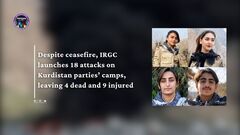
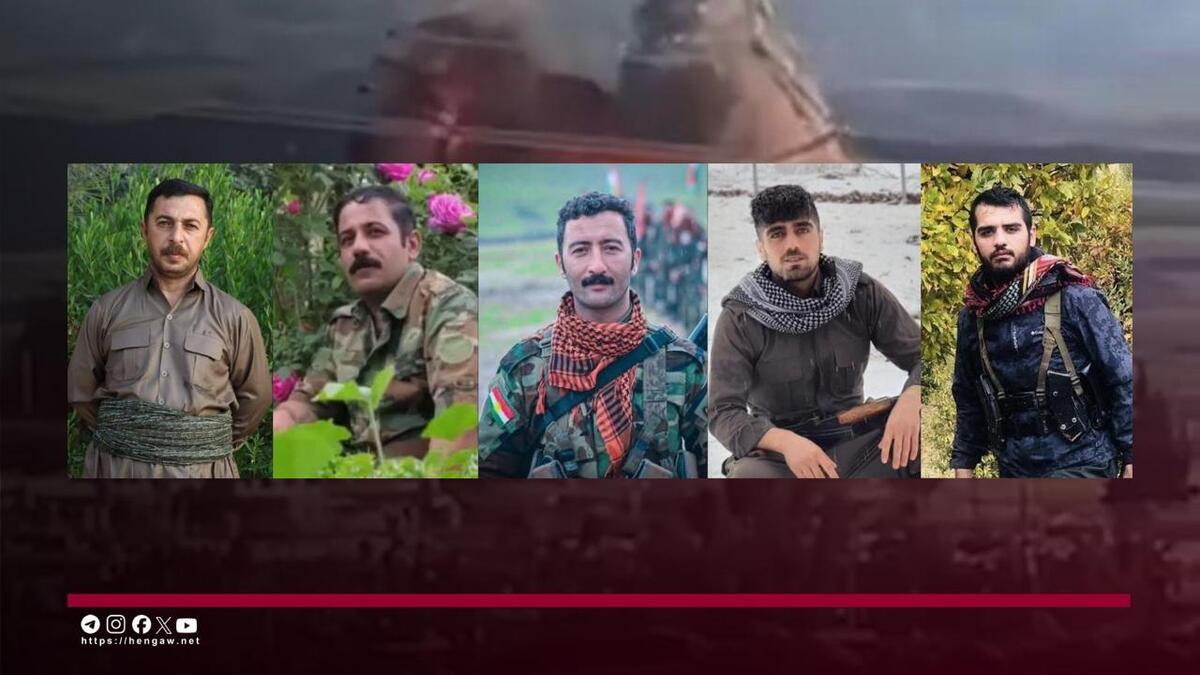
Following the outbreak of war between the United States, Israel, and the Islamic Republic of Iran, the Islamic Revolutionary Guard Corps (IRGC) has launched a new wave of missile and drone attacks targeting civilian camps, family residences, and bases of Iranian Kurdish opposition parties in the Kurdistan Region of Iraq. At least five Peshmergas have been killed and several others injured.
According to data compiled by the Hengaw Center for Statistics and Documentation, at least 112 missile and drone attacks have been carried out by the IRGC and Iran-backed proxy forces in Iraq. These strikes have targeted locations linked to Iranian Kurdish parties in Sulaymaniyah, Dukan, Koya, Degala, Bahrka, Soran, and Khabat. Civilian infrastructure, including residential buildings, schools, medical centers, and libraries, has also been hit.
Scale of attacks and confirmed casualties
According to Hengaw, the majority of recorded attacks have targeted camps affiliated with the Democratic Party of Iranian Kurdistan (PDKI). Other groups, including the Kurdistan Freedom Party (PAK), the Komala Party of Iranian Kurdistan, the Komala Party of Kurdistan Toilers, and the Khabat Organization of Iranian Kurdistan, have also been repeatedly targeted.
As of Thursday, March 19, 2026 , the twentieth day of the war, at least five Peshmerga have been killed and more than 20 others injured. Their conditions are reported to be stable.
The identities of those killed are as follows:
1. Jalal Rashidi — from Saqqez, married, member of PAK (killed in Erbil)
2. Esmail Rahimi — from Saqqez, single, member of Komala (killed in Sulaymaniyah)
3. Omid Vaisi — from Ravansar, single, member of Komala (killed in Sulaymaniyah)
4. Eqbal Salehi — from Saqqez, married, member of the Khabat Organization (killed in Erbil)
5. Fakhraddin Moradi — from Sanandaj, married, member of the Khabat Organization (killed in Erbil)
Targeted locations
According to Hengaw, multiple civilian camps and residential areas hosting families affiliated with Kurdish opposition groups have been targeted in Sulaymaniyah and Erbil provinces, including:
• Surdash civilian camp in Dukan (Sulaymaniyah)
• Azadi, Amiriyeh, and Zawiya Spi camps in Koya (Erbil)
• Camps in Zargwez and Zargwezle (Sulaymaniyah)
• Civilian camps in Degala (Erbil)
• Jezhnikan camp in Bahrka (Erbil)
• Pakshar camp in Degala (Erbil)
• Bashik camp affiliated with the Khabat Organization (Erbil)
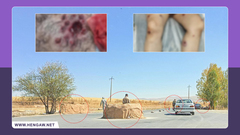
One of the most notable incidents involved the home of Taha Dadali, a member of the PDKI, in Soran, which was struck by an IRGC suicide drone. This appears to be the first known instance of a direct drone strike targeting a residential home of a party member inside an urban area, indicating a potential shift in Iran’s targeting strategy toward individuals within populated areas.
Deliberate targeting of civilian infrastructure
Field reports obtained by Hengaw confirm that Iranian forces have deliberately targeted civilian infrastructure, including family homes, schools attended by refugee children, healthcare facilities, and libraries.
These attacks have severely disrupted access to essential services such as education and medical care, particularly for children and families living in these areas.
Violations of international law and call for action
Hengaw states that the continuation of these attacks, including the targeting of political refugees, constitutes a clear violation of international humanitarian law, including the Fourth Geneva Convention, and may amount to war crimes.
By conducting cross-border strikes and targeting residential areas in the Kurdistan Region of Iraq, the Islamic Republic of Iran has placed the lives of thousands of civilians, including women and children, at serious risk.
The Hengaw Organization for Human Rights calls on the international community, the UN Special Rapporteur on Iran, and global human rights bodies to take immediate action in response to these attacks and to work toward preventing further escalation.