Civilian spaces in Kurdistan militarized amid escalating security measures
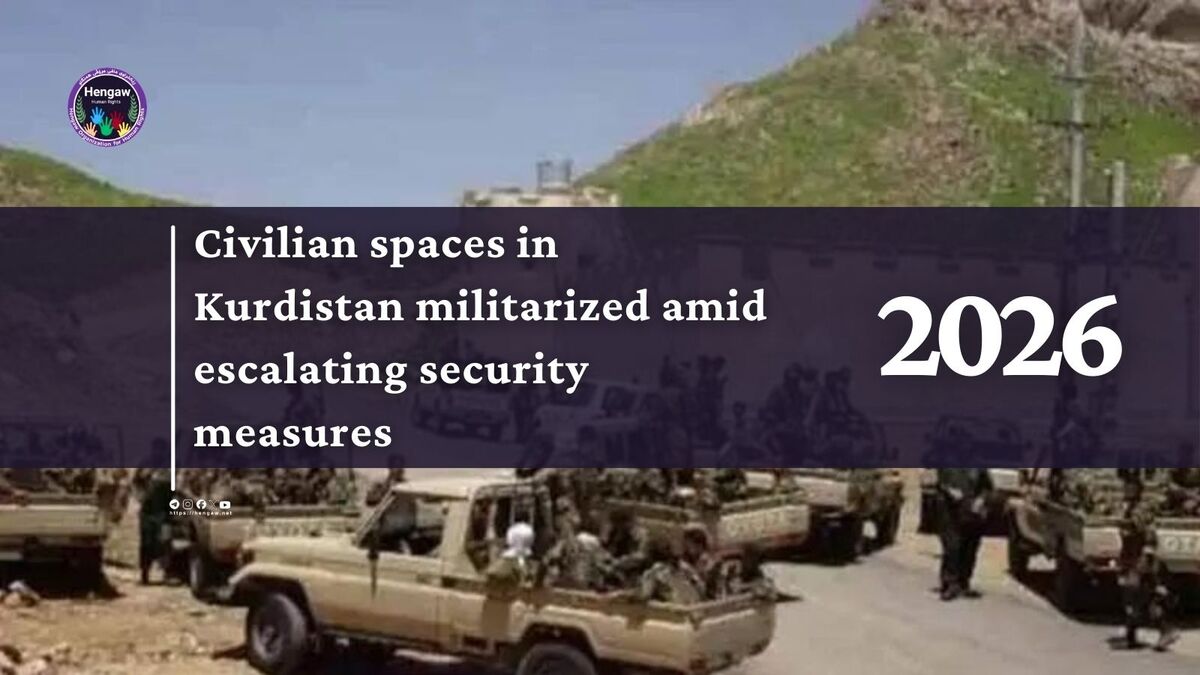
According to field reports collected by the Hengaw Organization for Human Rights, amid escalating military tensions in the region, the Islamic Republic of Iran has implemented a policy of using civilian spaces for military purposes across multiple cities in Kurdistan, including Sardasht, Paveh, Ravansar, Kermanshah, Mahabad, Saqqez, Marivan, and Baneh.
These measures have not only disrupted the daily lives of residents but have also placed civilians at serious and direct risk, effectively exposing them to danger as human shields in the event of potential airstrikes.
Public and educational spaces converted into military bases
Forces of the Islamic Revolutionary Guard Corps (IRGC) have been widely deployed, along with heavy military equipment, in civilian locations.
Educational centers:
Hengaw has learned through interviews with residents that a number of schools and universities in Saqqez, Sardasht, Sanandaj, Paveh, Ravansar, Kermanshah, Mahabad, and surrounding villages have been occupied and used by military forces. This is occurring despite the fact that, since the outbreak of the war between Iran, Israel, and the United States, educational institutions across the country have been closed.
Religious and sports facilities:
Eyewitnesses report that mosques in villages such as Boyuran-e Sofla (Sardasht), Gugjeh (Marivan), and rural areas of Paveh, as well as sports facilities — including Jalili Khosroshahi Hall in Mahabad and Hijab Sports Hall in Saqqez — have been converted into bases for hundreds of armed forces and storage sites for heavy and semi-heavy weaponry.
Legal implications under international law
Under the Fourth Geneva Convention, the distinction between military targets and civilian objects is a fundamental principle of international humanitarian law. The deployment of military forces within residential and civilian areas, as well as forcing residents to evacuate nearby homes, may constitute a serious violation, as it places civilian lives at deliberate risk during potential attacks.
Civilian resistance and border threats
Despite the prevailing climate of fear, Hengaw has received reports of collective civilian resistance against the militarization of public spaces. Residents of Gugjeh village in Marivan, for example, forced armed forces to withdraw from local mosques and schools. Similar resistance has been reported in Marivan and Saqqez, particularly in response to the use of sports facilities for military purposes.
Previous Hengaw reports have also documented that Iranian armed forces have been ordered to open direct fire on civilians moving through border areas, posing a serious threat to thousands of residents.
In recent days, Farzin Sasani was seriously injured after being shot by government forces near the Marivan border.
Additionally, Arman Khaleghpanah, a Kurdish man from Saqqez, was shot and killed near Baneh while driving his vehicle.
In addition, nomadic tribal communities in border areas including Qasr-e Shirin, Khosravi, Naft Shahr, and Sumar have been forced to leave their places following ultimatums and pressure from military forces. Hengaw previously reported that these evacuations were carried out to facilitate the deployment of IRGC armored and artillery units.
The ongoing measures across Kurdistan — including the militarization of mosques and schools, the establishment of numerous checkpoints, and threats of lethal force in border areas — point to a systematic violation of fundamental human rights.