Iran deploys proxy forces across multiple cities amid ongoing war
Hengaw – Tuesday, April 7, 2026
The large-scale deployment of proxy forces affiliated with the Islamic Republic of Iran have significantly increased across multiple regions, particularly in border cities in Kurdistan, as well as in Sistan and Baluchestan and Khuzestan, thirty days after the outbreak of the war between the United States, Israel, and Iran. The findings are based on field reports obtained by Hengaw Organization for Human Rights from informed sources, along with a review of videos published by state-affiliated media and social platforms.
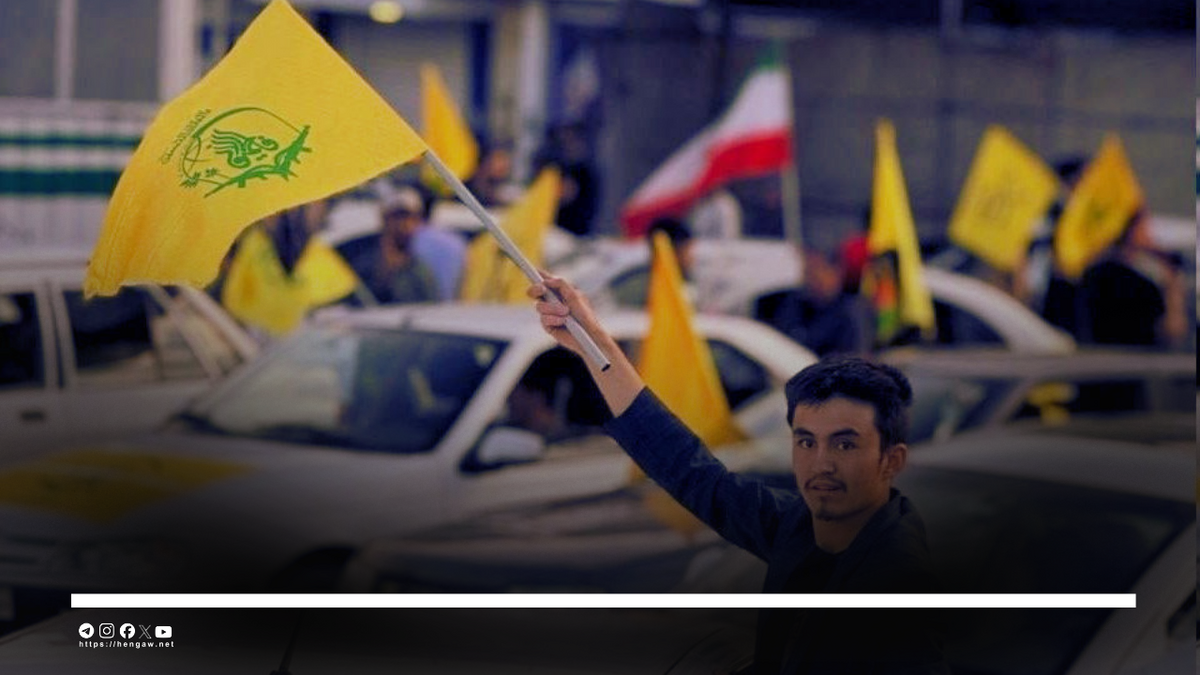
The presence of these forces has taken the form of military maneuvers and deployment in public urban spaces, in what appears to be part of a broader security strategy aimed at creating an atmosphere of fear and intimidation. The groups identified include Zeynabiyoun, Fatemiyoun, and Hashd al-Shaabi, whose members are primarily nationals of neighboring countries, including Pakistan, Afghanistan, and Iraq. They have been observed in several provinces, including Sistan and Baluchestan, Khuzestan, Razavi Khorasan, Tehran, and border cities in Kurdistan.
Deployment of Zeynabiyoun forces in Sistan and Baluchestan
Forces affiliated with the Zeynabiyoun Brigade have been observed in several cities in Sistan and Baluchestan, including Zahedan, Zabol, and Chabahar. Armed members carrying the group’s flags have appeared in the streets, staging marches and displays of force.
Footage published by media outlets affiliated with the Islamic Revolutionary Guard Corps shows, in some cases, the presence of children holding weapons. Members of these forces have also been seen carrying images of Iranian officials and chanting slogans in support of the Islamic Republic.
Presence of Hashd al-Shaabi forces in Kurdistan border cities
In recent days, Hashd al-Shaabi forces have expanded their presence in border areas of Kurdistan, particularly in Kermanshah (Kermashan), Ravansar, Javanrud, and Marivan.
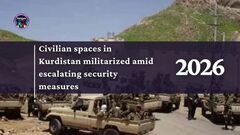
According to reports from Marivan, some Iraqi Hashd al-Shaabi paramilitary forces have entered the city and have been accommodated in mosques and sports halls. At the same time, the city has become heavily militarized, with dozens of tanks and armored vehicles deployed near military bases, including in border villages such as Eskol and Sianav. Videos circulating in recent days also show these forces conducting military exercises in Ravansar, aimed at creating fear and intimidation among residents.
An informed source told Hengaw that the movement of these forces is taking place through border crossings including Khosravi, Somar, and Mehran.
Kermanshah province (Kermashan) has also served in previous years as a key center for the training and deployment of such forces. Facilities such as Ramadan Headquarters and Sadeghieh Garrison have reportedly been used for military training and accommodation.
Movements of proxy forces in Tehran, Khuzestan, and Razavi Khorasan
In Tehran, videos have emerged showing the arrival of convoys belonging to Fatemiyoun and Hashd al-Shaabi forces. In some areas of the city, including around Azadi Square, these forces have staged street parades and public displays. Some armed members of the Fatemiyoun Brigade have also been stationed at checkpoints in the city.
Images published on social media indicate that armed Hashd al-Shaabi forces have crossed the Iran–Iraq border and entered cities in Khuzestan province, including Ahvaz, Abadan, and Khorramshahr, where they were welcomed by officials of the Islamic Republic upon arrival.
The presence of these forces is not limited to Tehran and Khuzestan. Reports also indicate their deployment in Mashhad, where informed sources have reported the presence of Fatemiyoun forces in the Vakilabad Boulevard area and their involvement in security activities alongside Basij forces.
Hengaw warns of expanding deployment of proxy forces in Iran
Hengaw Organization for Human Rights emphasizes that the presence of these forces is not solely military in nature but forms part of a broader security strategy by Iranian authorities to suppress potential public protests, create an atmosphere of fear, and restrict any form of social or civic mobilization.
Previous documented reports have also indicated the involvement of these forces in the suppression of protests during the Woman, Life, Freedom (Jin, Jiyan, Azadi)movement.
Hengaw Organization for Human Rights warns that the expansion of proxy forces inside Iran reflects an escalation in repressive security policies. Their presence across urban areas significantly increases the risk of violence, broader human rights violations, and the deepening of fear within society.
Network of Iran’s proxy forces
The network of proxy forces affiliated with the Islamic Republic of Iran, often referred to as the “Axis of Resistance,” includes groups such as Hashd al-Shaabi in Iraq, Zeynabiyoun operating in Pakistan, and Fatemiyoun, composed largely of Afghan nationals residing in Iran, as well as affiliated militias in Lebanon and Yemen. These groups receive financial and logistical support from the Islamic Revolutionary Guard Corps, and most of them are Shia and supporters of the Islamic Republic of Iran.