Detainees injured after airstrikes hit security facilities in Sanandaj
Hengaw - Thursday, March 5, 2026
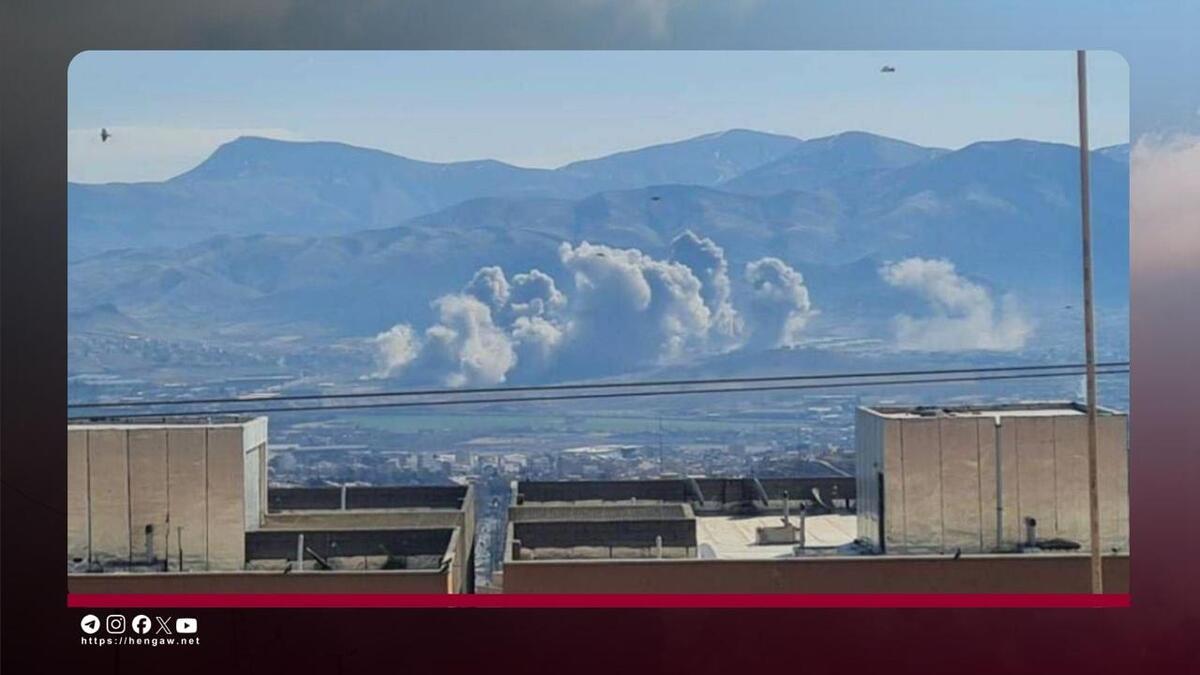
Several detainees and Kurdish political prisoners were injured after Israeli and U.S. airstrikes targeted security facilities in the city of Sanandaj (Sine), including the Intelligence Department building and the Shahramfar base of the Islamic Revolutionary Guard Corps (IRGC).
According to information received by Hengaw Organization for Human Rights, the strikes occurred in the early hours of Monday, March 2, when Israeli and U.S. fighter jets targeted the Intelligence Department building and the IRGC Shahramfar base in Sanandaj. A number of detainees who had been held in these facilities in recent months were injured in the attacks. It remains unclear whether any detainees were killed.
Sources inside Kosar Hospital in Sanandaj told Hengaw that the hospital’s VIP ward has been under the control of Iranian government forces for the past three days. Several injured detainees are being held and treated in this ward under strict security measures. According to these sources, the ward is guarded around the clock and access to the area is tightly controlled by security forces.
In separate accounts, residents of Sanandaj told Hengaw that the families of several recently detained individuals, who had been held at the Shahramfar base and other security facilities in the city, have attempted to obtain information about their relatives by visiting locations targeted in the airstrikes. According to these accounts, some families, after receiving no information from authorities, searched the areas surrounding the targeted facilities out of concern that detainees might have been among those killed or injured. However, military forces prevented them from approaching the sites, and their efforts to obtain information about their relatives have remained unsuccessful.
Hengaw had previously issued an urgent warning regarding the situation of prisoners during wartime conditions. Based on multiple reports received by the organization, the situation of prisoners, particularly political prisoners and individuals detained during recent protests, has been assessed as deeply concerning. According to these reports, many families remain unaware of the location and condition of their detained relatives. In some prisons, ward doors have been locked by prison authorities, a situation that could place detainees at serious risk in the event of further attacks.
Hengaw has also emphasized that under Resolution No. 211 of the Iranian Judiciary regarding the reduction of prison populations during emergency conditions, authorities are obligated to take measures to protect the lives of prisoners. These measures may include conditional release, modification of detention orders, acceptance of bail, or transferring prisoners to safer locations. However, recent reports indicate that the location and condition of many detainees remain unclear, and concerns about their fate and health continue to grow.
Under Article 83 of the Fourth Geneva Convention, holding detainees near active combat zones or strategic military targets constitutes a serious violation of international humanitarian law. States are obligated to guarantee the safety of detainees as “protected persons.” Failure to transfer prisoners to safe locations and withholding information from families not only violates the UN Body of Principles for the Protection of All Persons under Any Form of Detention or Imprisonment (Principle 16), but under current circumstances may also amount to a grave disregard for the right to life and a form of psychological suffering inflicted on their families.
Emphasizing the direct responsibility of the Islamic Republic of Iran for the lives and health of all detainees, Hengaw calls on international bodies and United Nations human rights mechanisms to intervene urgently to ensure the protection of prisoners, guarantee their immediate access to medical care, and demand transparency regarding the location and condition of detainees.